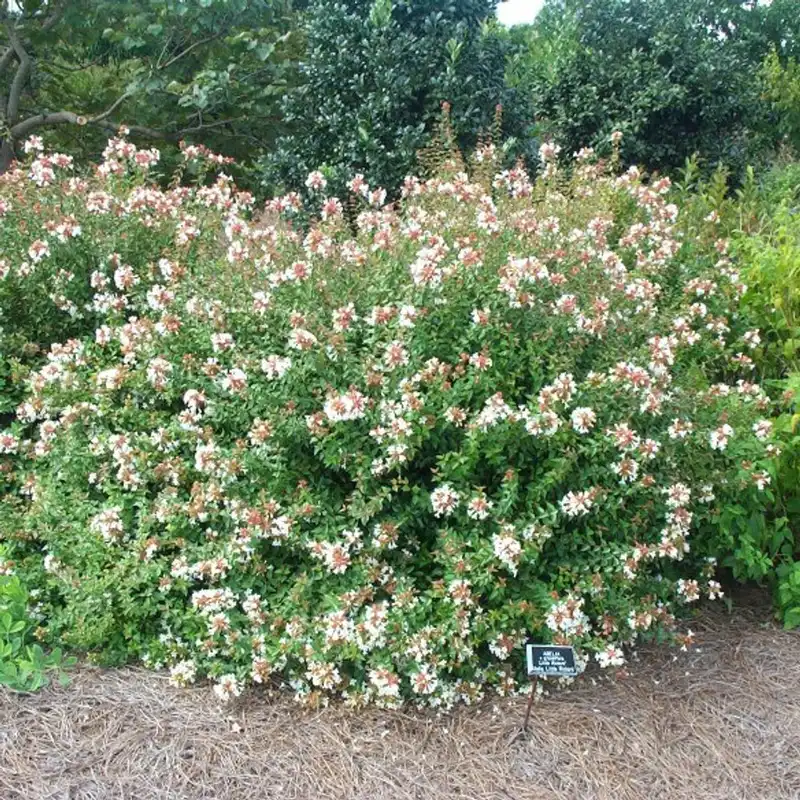
Abelia
Abelia x grandiflora
Elegant arching shrub with fragrant, long-lasting blooms.
- Plant Type
- Shrubs & Roses
- Width
- 3–6 Feet
- Height
- 3–6 Feet
- USDA hardiness zone
- 6 - 9
- Sun requirements
- Full Sun, Part Shade
- Water requirements
- Medium
- Design image count
- 3
Design images (3)


Bring your vision to life
The design images above are drag-and-drop ready — place this plant on a photo of your own yard and see it before you plant it.
Create design onlineAbout Abelia
Glossy abelia is a rounded, arching shrub with glossy green leaves and fragrant white-to-pink tubular flowers that can continue from late spring into fall. It commonly reaches about 3–6 feet tall and wide, though cultivar and climate affect mature size and winter leaf retention.
## Landscape role and seasonal display
Clusters of small, bell-shaped flowers form along new growth and attract bees, butterflies, and hummingbirds. The foliage is usually dark green, while cool weather can bring reddish-purple fall color. In warm regions some leaves persist through winter; in colder climates the shrub may lose its leaves or die back after a hard freeze. This species-level record describes the general hybrid, while named cultivar records capture selected foliage colors, compact forms, and other differences.
Use glossy abelia in a mixed border, informal hedge, privacy screen, mass planting, or large container. Its arching stems create a softer outline than a tightly clipped hedge. It grows in USDA zones 6–9 in this catalog; some regional references include zone 5, while winter damage becomes more likely at the colder edge.
## Growing conditions and origin
Grow in full sun for best flowering or partial shade where some reduction in bloom is acceptable. It prefers moist, well-drained soil and tolerates clay, sand, and loam. Established shrubs tolerate moderate dry periods, but this is not a substitute for watering during establishment. Glossy abelia is sensitive to salty soil. Botanically, *Abelia × grandiflora* is an artificial hybrid of *A. chinensis* and *A. uniflora*, introduced in Italy in the nineteenth century. No single breeder or cultivar brand applies to this general species entry. See the [NC State Extension profile](https://plants.ces.ncsu.edu/plants/abelia-x-grandiflora/), [UF/IFAS guide](https://ask.ifas.ufl.edu/publication/FP001), and [Kew botanical record](https://powo.science.kew.org/taxon/urn:lsid:ipni.org:names:148201-1/general-information) for additional details.
## Maintenance
Low maintenance after establishment. Prune in late winter or early spring if shaping or removing winter damage; flowers form on new growth, so this timing preserves the coming season’s display. Keep soil drained, water while roots establish, and allow enough room for a rounded, arching habit.