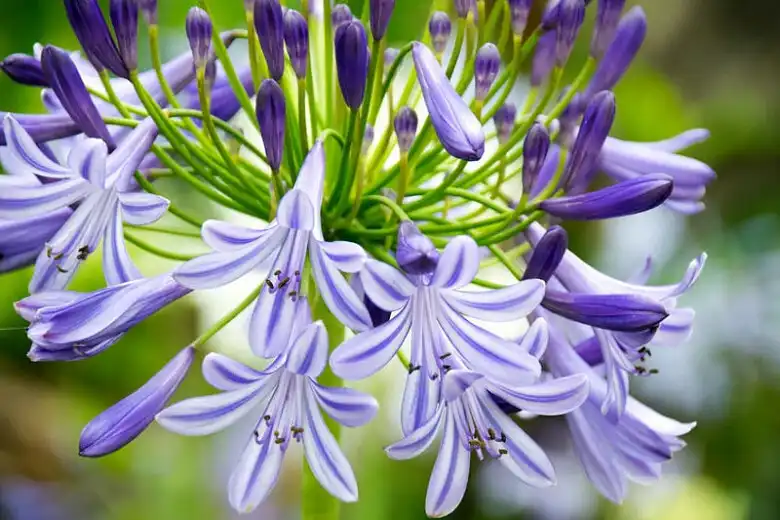
Agapanthus
Agapanthus
Rounded flower clusters above strap-like foliage; flower color and plant size vary by species and cultivar.
- Plant Type
- Perennials & Annuals
- Width
- 1-2 Ft.
- Height
- 1.5-4 Ft.
- USDA hardiness zone
- 6 - 10
- Sun requirements
- Full Sun, Part Shade
- Design image count
- 18
Design images (18)


Bring your vision to life
The design images above are drag-and-drop ready — place this plant on a photo of your own yard and see it before you plant it.
Create design onlineAbout Agapanthus
Agapanthus is a clump-forming perennial grown for rounded clusters of trumpet-shaped flowers above strappy foliage. The genus includes evergreen and deciduous plants, dwarf container forms, and larger border selections, so flowering time, hardiness, and mature size depend on the species or cultivar. [Kew’s Plants of the World Online](https://powo.science.kew.org/taxon/urn%3Alsid%3Aipni.org%3Anames%3A331131-2) classifies the accepted genus in Amaryllidaceae.
## Landscape Use
Use compact selections in patio containers or repeat larger forms along sunny borders and paths. Flower stems also suit cutting. Blue is common, but cultivated agapanthus also flowers in white and purple tones. For general growing guidance, see the [RHS agapanthus guide](https://www.rhs.org.uk/plants/agapanthus/growing-guide) and [University of Wisconsin Extension profile](https://hort.extension.wisc.edu/articles/agapanthus/).
## Growing Conditions
Plant in full sun for the best flowering; light shade can help in hotter climates. Moist, organic soil that drains freely supports growth. Avoid waterlogged sites, especially in cold regions; containers make winter protection easier. Established plants generally need little extra irrigation, though a dry late summer can reduce next year’s bloom. Overwatering and heavy feeding can weaken flowering.
Agapanthus grows from fleshy rhizomes. In cold-winter areas, use a locally hardy cultivar or protect containers indoors. The sap can irritate sensitive skin and cause pain if ingested. The [UF/IFAS extension profile](https://ask.ifas.ufl.edu/publication/FP018) summarizes its light, soil, landscape use, and handling cautions.
## Maintenance
Remove faded flower stems at their base if you want to limit seed formation or encourage a tidier clump. Divide only when a container-grown plant has outgrown its pot; follow cultivar-specific guidance for timing and winter care.