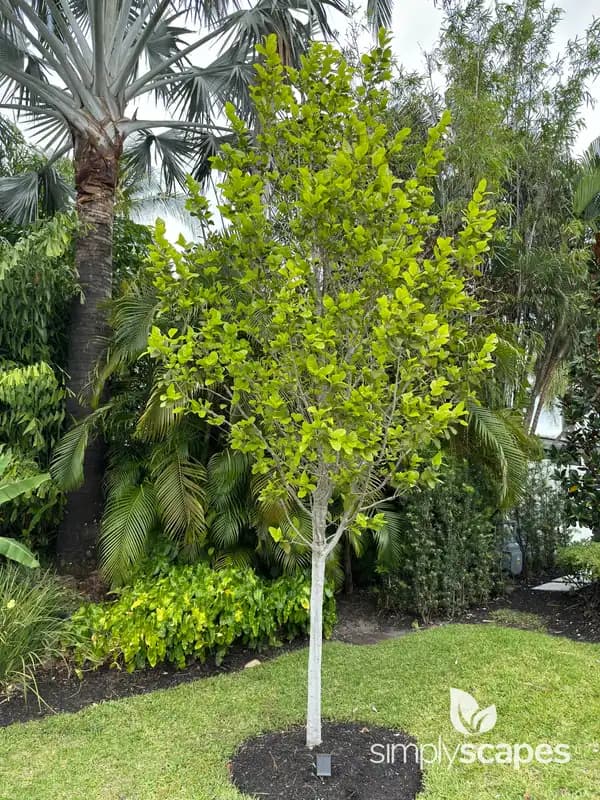
Jackfruit Tree
Artocarpus heterophyllus
The world's largest tree-borne fruit, perfect for tropical landscapes and meat-free cooking.
- Plant Type
- Edible Plants
- Width
- 20-30 Ft.
- Height
- 50-70 Ft.
- USDA hardiness zone
- 4 - 11
- Sun requirements
- Full Sun, Part Shade
- Design image count
- 1
Design images (1)

Bring your vision to life
The design images above are drag-and-drop ready — place this plant on a photo of your own yard and see it before you plant it.
Create design onlineAbout Jackfruit Tree
Jackfruit is a tropical evergreen tree grown for its large, edible multiple fruits, which develop directly on the trunk and major branches. The species can become a substantial canopy tree in warm climates, so leave generous room or plan selective pruning where harvest access matters. [UF/IFAS](https://ask.ifas.ufl.edu/publication/MG370) reports trees 30–40 feet tall in Florida, while conditions and pruning affect mature size elsewhere.
## Landscape Use
Use jackfruit as a fruiting specimen only where winters are reliably mild and the site has space for a large tree. UF/IFAS describes it as suited to hot, humid tropical and warm subtropical regions; leaves may be damaged at freezing, and severe cold can kill the tree. This is not a cold-climate landscape tree.
## Seasonal Interest and Fruit
The glossy evergreen leaves provide year-round structure in suitable climates. Small male and female flowers occur on the same tree, including on the trunk and large limbs. The main Florida harvest season is summer into fall. Fruits vary greatly in size and flesh texture; ripe pulp is eaten fresh, while less-ripe pulp is used in cooked dishes.
## Siting and Water
Choose full sun and well-drained soil. The tree tolerates sandy and sandy-loam soils, but does poorly in standing water or continuously wet ground. Water young trees during establishment and irrigate mature trees through prolonged dry spells, especially when supporting fruit production.
## Maintenance
Selective pruning can keep the crown accessible and reduce its footprint; UF/IFAS describes annual pruning as a way to maintain a smaller harvestable tree. Protect the trunk from mower and string-trimmer injury. Harvest mature fruit promptly and use care when cutting it: the fruit contains sticky latex that can stain.