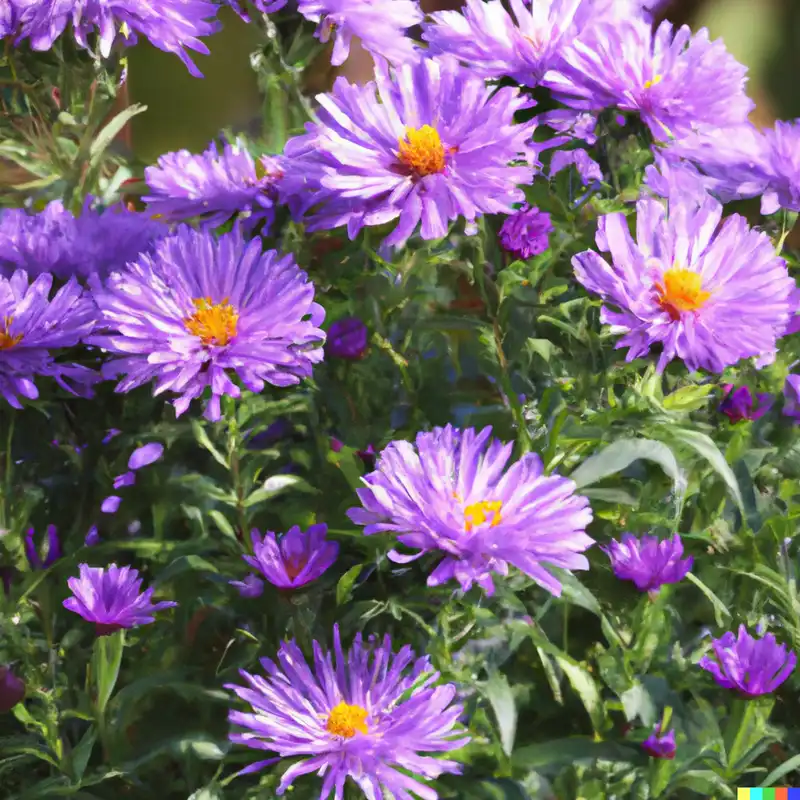
Aster
Aster
Vibrant star-shaped blooms that brighten late-season gardens with effortless charm.
- Plant Type
- Perennials & Annuals
- Width
- 2-4 Ft.
- Height
- 2-4 Ft.
- USDA hardiness zone
- 3 - 8
- Sun requirements
- Full Sun, Part Shade
- Design image count
- 1
Design images (1)

Bring your vision to life
The design images above are drag-and-drop ready — place this plant on a photo of your own yard and see it before you plant it.
Create design onlineAbout Aster
Asters in the genus *Aster* are herbaceous perennials valued for daisy-like flower heads and seasonal color. Species vary widely in stature, flowering time and flower shades, so use the species or cultivar name when choosing one for a particular garden spot.
## Garden use and siting
The [RHS guide](https://www.rhs.org.uk/plants/aster/growing-guide) groups several plants still commonly called asters, including species now classified as *Symphyotrichum* and *Eurybia*. The narrower modern genus *Aster* is an Old World group; [UF/IFAS](https://ask.ifas.ufl.edu/publication/FP056) describes it as roughly 186 species native to Europe and Asia. Across the group, asters suit perennial borders and pollinator plantings, while shorter species also fit rock gardens and edging.
Choose a sunny position; many commonly grown asters tolerate light or partial shade, though flowering may be reduced there. Soil and water needs depend on species. Many garden asters prefer fertile soil that stays moderately moist but drains well, while European and Asian species often need especially good winter drainage.
## Size and seasonal interest
Aster species range from small alpine plants to tall border perennials. UF/IFAS reports heights from about 1 to 8 feet depending on species; RHS gives a broad 20 cm to 2 m range for its grouped asters. Flowers occur in blue, lavender, pink, purple, red and white, with many types blooming in summer or fall. These are genus-level possibilities, not traits shared by every species.
## Maintenance
Water newly planted asters while they establish, then adjust watering to the named plant and local conditions. Divide established clumps every few years if flowering weakens or the center becomes crowded. Cut back dead stems when new growth begins, and stake only taller selections that tend to flop.