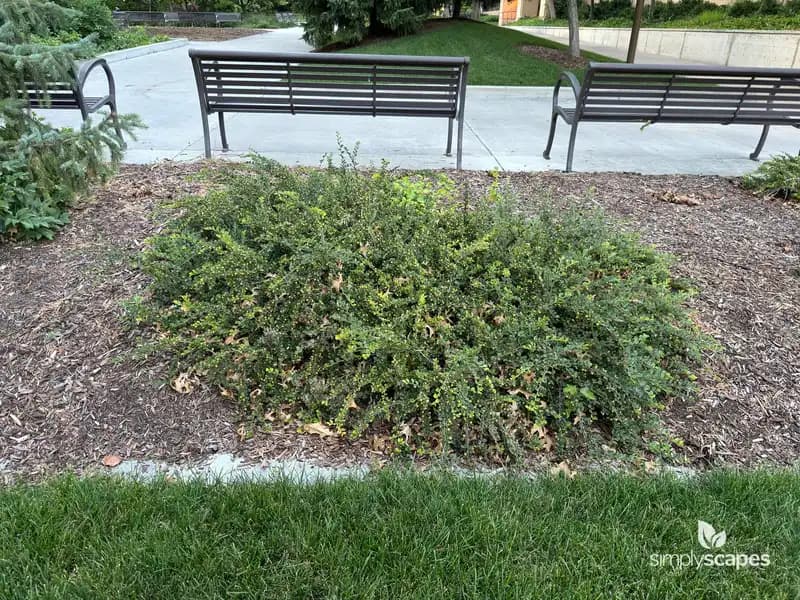
Rock Cotoneaster
Cotoneaster horizontalis
A striking groundcover with a unique fishbone branch pattern and vibrant red berries.
- Plant Type
- Shrubs & Roses
- Width
- 5-7 Ft.
- Height
- 1.6-3.3 Ft.
- USDA hardiness zone
- 5 - 7
- Sun requirements
- Full Sun, Part Shade
- Design image count
- 2
Design images (2)


Bring your vision to life
The design images above are drag-and-drop ready — place this plant on a photo of your own yard and see it before you plant it.
Create design onlineAbout Rock Cotoneaster
Rock cotoneaster (Cotoneaster horizontalis) is a low, deciduous shrub with distinctive flat, fishbone-like branches. Pink flowers appear in spring, followed by red fruits that can persist into fall and provide food for birds.
## Form and seasonal interest
[NC State Extension](https://plants.ces.ncsu.edu/plants/cotoneaster-horizontalis/) describes a mature height of 2–3 feet and spread of 6–8 feet, while [Oregon State](https://landscapeplants.oregonstate.edu/plants/cotoneaster-horizontalis) notes its layered branching and broad, spreading outline. The existing 0.5-meter height and 2-meter width are retained; the height display range is updated to 1.6–3.3 feet to match the [Royal Horticultural Society’s full 0.5–1-meter range](https://www.rhs.org.uk/plants/4619/cotoneaster-horizontalis/details). Glossy green leaves take reddish to purple tones in autumn. This low, wide habit can cover open ground and help stabilize a slope, though it needs room to spread.
## Site and uses
Plant in full sun or partial shade in well-drained soil. NC State reports USDA zones 5a–7b and notes tolerance of drought, pollution, and poor soil once established. The RHS lists this species under Schedule 9 in Great Britain, where planting or causing it to grow wild is an offense; check local rules because that restriction is jurisdiction-specific.
## Maintenance
Water during establishment and prolonged dry spells. Use selective pruning to remove damaged branches or keep the spread within its space, and preserve the characteristic layered branch pattern where practical.