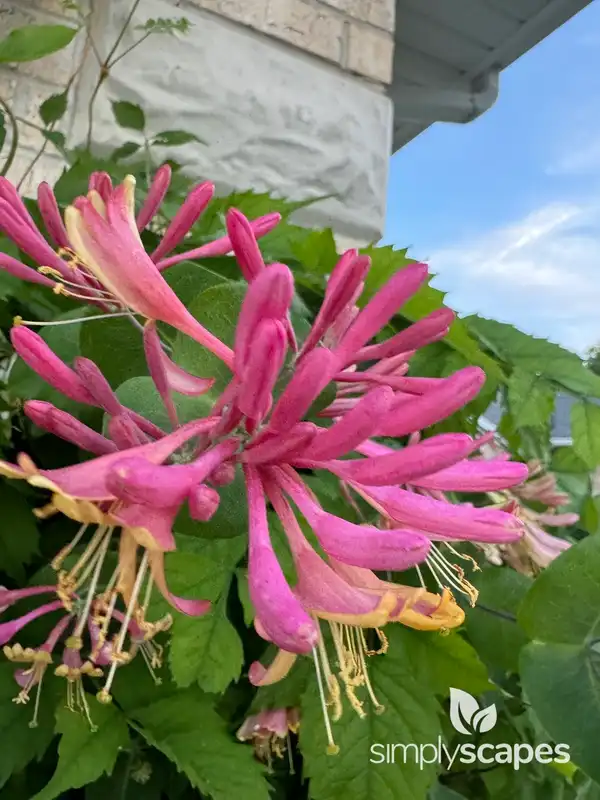
Honeyberry Bush (Lonicera)
Lonicera
A fragrant, versatile climber or shrub for pollinators.
- Plant Type
- Shrubs & Roses
- Width
- 3-6 Ft.
- Height
- 10-20 Ft.
- USDA hardiness zone
- 4 - 9
- Sun requirements
- Full Sun, Part Shade
- Design image count
- 1
Design images (1)

Bring your vision to life
The design images above are drag-and-drop ready — place this plant on a photo of your own yard and see it before you plant it.
Create design onlineAbout Honeyberry Bush (Lonicera)
Lonicera is an accepted genus of honeysuckles with more than 150 recognized species. It includes twining climbers and shrubs, with both deciduous and evergreen forms; flowering season, mature size, and hardiness depend on the species rather than the genus as a whole.
## Choosing a Honeysuckle
Kew’s Plants of the World Online lists 159 accepted Lonicera species. Before planting, identify the species or cultivar so its mature dimensions and climate needs are clear. Climbing types need sturdy support and room to twine, while shrubby species range from compact ground-level forms to larger garden shrubs.
## Siting and Care
RHS guidance for shrubby honeysuckles favors fertile, freely draining soil in sun or partial shade and cautions against waterlogged or excessively dry ground. Climbing types also need space and support; many flower well in partial shade. Pruning timing varies with flowering habit, so follow guidance for the identified species rather than applying one schedule across the genus.
## Berries and Identification
“Honeyberry” usually refers to edible blue honeysuckle, *Lonicera caerulea*, not every plant in this genus. Eat berries only from a positively identified honeyberry shrub; the RHS warns that other honeysuckle berries can be toxic if eaten in quantity. See [Kew’s Lonicera taxonomy](https://powo.science.kew.org/taxon/urn%3Alsid%3Aipni.org%3Anames%3A30006074-2), the RHS guides to [shrubby honeysuckle](https://www.rhs.org.uk/plants/honeysuckle/shrubby) and [edible honeyberry](https://www.rhs.org.uk/plants/honeysuckle/edible).
## Maintenance
Water new plantings while they establish, mulch to moderate soil moisture, and provide support for climbers. Prune only after checking the flowering schedule of the species or cultivar in hand.