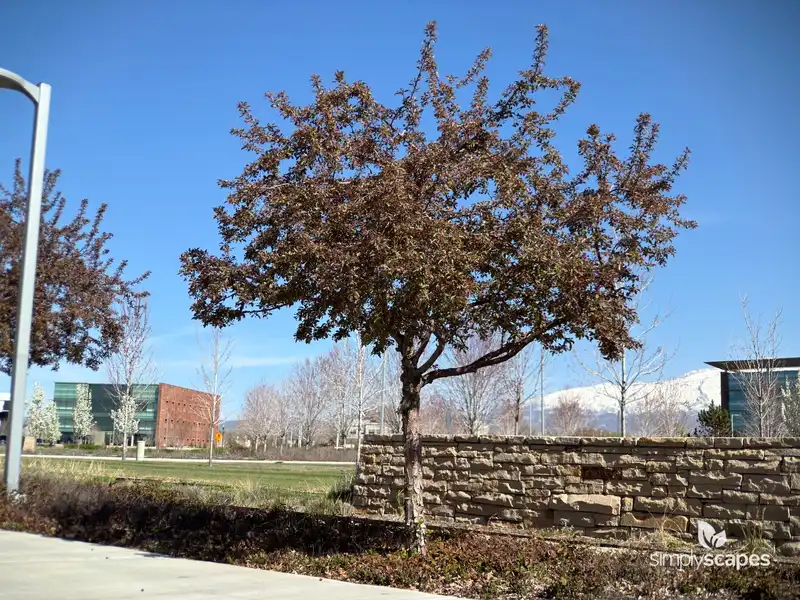
Siberian Crabapple Tree
Malus baccata
A hardy, white-flowering crabapple with vibrant winter fruit.
- Plant Type
- Flowering Trees
- Height
- 30-40 Ft.
- USDA hardiness zone
- 2 - 7
- Sun requirements
- Full Sun, Part Shade
- Design image count
- 3
Design images (3)


Bring your vision to life
The design images above are drag-and-drop ready — place this plant on a photo of your own yard and see it before you plant it.
Create design onlineAbout Siberian Crabapple Tree
Siberian crabapple is a cold-hardy deciduous species with a broad, spreading crown, spring flowers, and small red or yellow fruits. Its fruit can remain on the branches into winter, giving the tree seasonal interest after the leaves fall.
## Form and seasonal interest
The species is variable, but mature trees commonly reach about 8–15 metres tall and can spread broadly. Fragrant white flowers open in spring, sometimes from pink-tinged buds; small crabapples ripen red or yellow and may persist into winter. Leaves are green in the growing season and can yellow in autumn. The [Trees and Shrubs Online species account](https://www.treesandshrubsonline.org/articles/malus/malus-baccata/) describes the species’ range and cold hardiness; the [RHS profile](https://www.rhs.org.uk/plants/136977/malus-siberian-crab/details) lists an eventual spread greater than 8 metres.
## Growing conditions
Grow in full sun or partial shade in moderately fertile, moist but well-drained soil. The species is listed for USDA Zones 2–7. Its mature spread calls for generous space away from buildings, paths, and overhead utilities. Malus baccata is also used in apple breeding and as a rootstock, but it is also grown as a landscape tree.
## Maintenance
Water young trees during establishment and during extended dry periods. Remove damaged or crossing branches and prune to maintain a sound framework; avoid removing spring flower buds. Watch for common apple-tree pests and diseases, including aphids, caterpillars, apple scab, and fire blight.