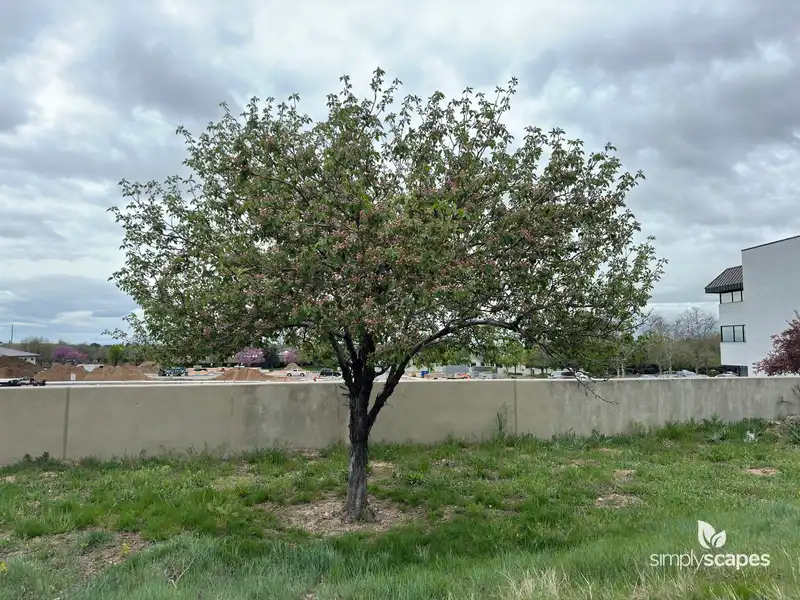
Prairie Crabapple Tree
Malus ioensis
A small deciduous native tree with fragrant spring flowers, autumn crabapples, and wildlife value.
- Plant Type
- Flowering Trees
- Width
- 15-25 Ft.
- Height
- 10-35 Ft.
- USDA hardiness zone
- 4 - 8
- Sun requirements
- Full Sun
- Design image count
- 1
Design images (1)

Bring your vision to life
The design images above are drag-and-drop ready — place this plant on a photo of your own yard and see it before you plant it.
Create design onlineAbout Prairie Crabapple Tree
Prairie crabapple (Malus ioensis) is a deciduous North American tree whose deep pink buds open into fragrant white or pinkish-white spring flowers. Small green to yellow-green crabapples, peeling bark, and orange-red autumn foliage add seasonal interest, while the fruit supports wildlife.
## Growing Conditions
Plant in full sun for strongest flowering, though the species tolerates partial shade. It grows in a range of soils, with fertile, deep, moist, well-drained loam supporting steady growth. The [RHS species profile](https://www.rhs.org.uk/plants/159705/malus-ioensis/details) describes a mature height and spread of 4–8 metres; the [Morton Arboretum profile](https://mortonarb.org/plant-and-protect/trees-and-plants/prairie-crabapple/) gives a more typical 20–30 feet and notes that the species is native across the central United States. Mature size varies with site and growing conditions, so allow room for a broad crown.
## Flowers and Fruit
Flowers appear in mid to late spring, opening from pink buds to white or pale pink clusters. About an inch across, the green-yellow fruit ripens in autumn and is valued by birds and other wildlife. This species profile covers the wild prairie crabapple rather than named garden selections such as Prairie Rose.
## Maintenance
Water while establishing and during prolonged dry periods, especially in well-drained soils. Prune lightly to correct structure and improve light in the crown, removing dead, diseased, or crossing branches. Monitor for cedar-apple rust, to which the species is very susceptible, and other apple diseases; it has some resistance to apple scab but is not disease-proof. Although the fruit is generally edible when cooked, remove the seeds, which contain toxins.