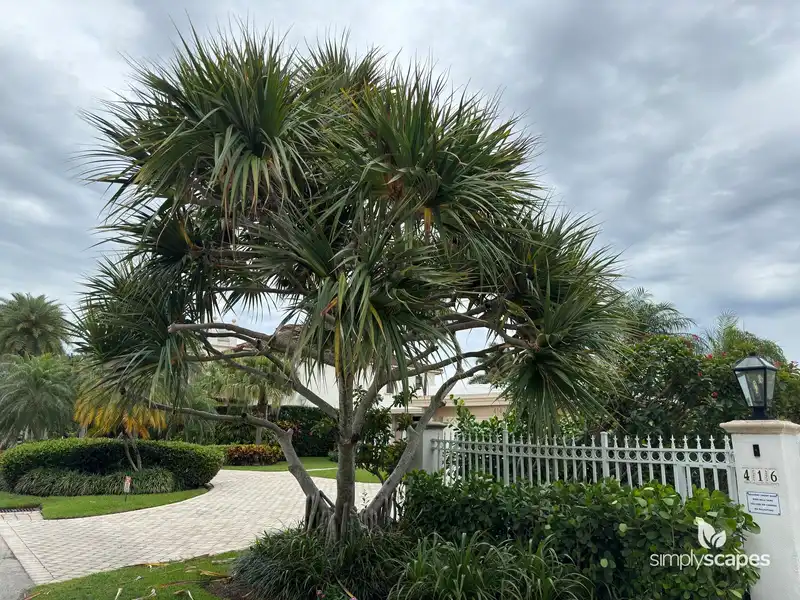
Tahitian Screw Pine
Pandanus tectorius
An iconic coastal tree with dramatic prop roots and exotic fruit.
- Plant Type
- Flowering Trees
- Width
- 16-40 Ft.
- Height
- 13-46 Ft.
- USDA hardiness zone
- 10 - 12
- Sun requirements
- Full Sun, Part Shade
- Design image count
- 13
Design images (13)


Bring your vision to life
The design images above are drag-and-drop ready — place this plant on a photo of your own yard and see it before you plant it.
Create design onlineAbout Tahitian Screw Pine
Pandanus tectorius, known here as Tahitian Screw Pine, is a large tropical evergreen with spiral leaf clusters and a branching trunk supported by prop roots. Its size, flowering, and fruiting depend on local conditions and whether a plant is male or female.
## Form and landscape use
This species can serve as a coastal specimen, screen, or erosion-control plant where there is room for its wide crown and aerial roots. Leaves have sharply toothed margins; female plants form pineapple-like fruit, while the fragrant male flower bracts are also ornamental. Native Plants Hawaiʻi describes hala as tolerant of sandy, salty, windy sites and notes that established trees need little water except during prolonged drought. [Native Plants Hawaiʻi species profile](https://nativeplants.hawaii.edu/plants/pandanus-tectorius/)
## Growing conditions
Give it full sun and well-drained soil in a warm climate. North Carolina State Extension lists USDA Zones 10–12 and advises container culture with indoor winter protection where frost is possible. [NCSU Extension plant profile](https://plants.ces.ncsu.edu/plants/pandanus-tectorius/)
## Maintenance
Water young plants weekly when the ground is dry until new growth appears; mature plants usually need supplemental water only during prolonged drought. Remove yellow or brown leaves as needed, and site the plant away from heavy foot traffic because of its toothed leaves and prop roots.