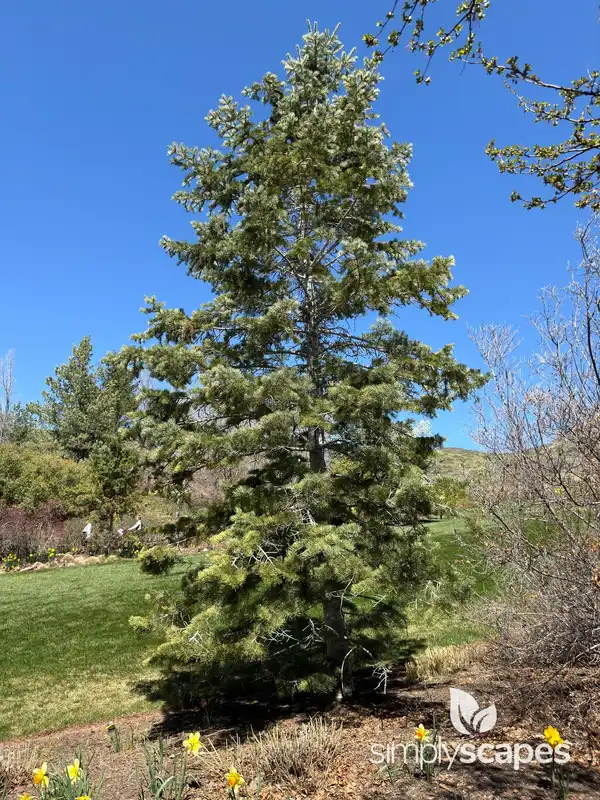
White Fir
Abies concolor
A majestic, citrus-scented evergreen with stunning silvery-blue needles.
- Plant Type
- Conifer Trees
- Width
- 15–30 ft
- Height
- 30–70 ft
- USDA hardiness zone
- 3 - 7
- Sun requirements
- Full Sun, Part Shade
- Water requirements
- Medium
Bring your vision to life
The design images above are drag-and-drop ready — place this plant on a photo of your own yard and see it before you plant it.
Create design onlineAbout White Fir
White fir (*Abies concolor*), also called concolor or Colorado fir, is a long-lived evergreen from western North America with soft, silvery blue-green needles and a light citrus scent when crushed. Its broad, pyramidal crown and substantial mature size make it best for open lawns, parks, or large-property landscapes rather than tight residential spaces.
## Form and landscape role
Young trees have a dense, tiered pyramidal outline; older trees develop a broader, domed crown. The flattened needles are blue-green on both sides, often with a pale underside, and upright cones break apart on the tree as they release seed. White fir is used as a specimen or shade tree and can provide screening where there is room for its eventual width. University extension references place typical landscape size around 30–70 feet tall and 15–30 feet wide; local conditions affect the result.
## Growing conditions
Choose a sunny site, though established trees tolerate some shade. Deep, well-drained soil supports the roots; avoid persistently wet ground and heavy clay. White fir is more drought tolerant than many firs after establishment, but it benefits from consistent moisture while young and during extended dry periods. Its reported hardiness spans USDA Zones 3–7. In regions with hot, humid summers, check local performance before planting; it is better suited to cooler or drier climates than the humid Southeast.
## Sources
- [University of Wisconsin–Madison Extension: Concolor Fir](https://hort.extension.wisc.edu/articles/concolor-fir-abies-concolor/) — landscape size, form, soil, growth, and pruning.
- [NC State Extension: Western White Fir](https://plants.ces.ncsu.edu/plants/abies-concolor/common-name/western-white-fir/) — climate, light, cultivation size, and spring frost sensitivity.
- [Stony Brook University Arboretum: White Fir](https://www.stonybrook.edu/arboretum/tree_collection/abies_concolor.html) — moderate moisture and drought tolerance once established.
## Maintenance
White fir needs little shaping; its natural form is part of its appeal. Avoid topping or shearing the leader. Water a new planting deeply as it establishes, then adjust irrigation to rainfall, soil drainage, and summer heat. For an established tree, occasional dry periods are usually manageable, but prolonged drought can still stress it. Remove dead or damaged branches as needed, and leave enough room for the lower limbs and mature crown.