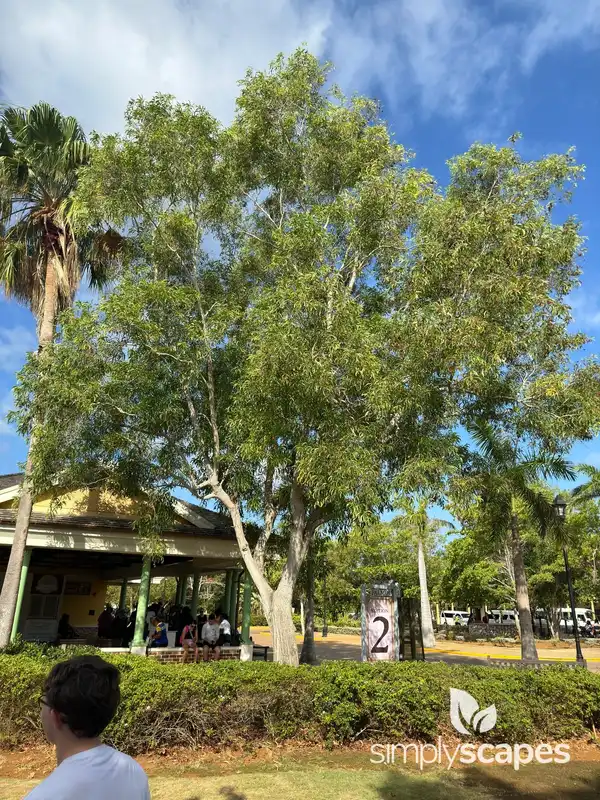
Earleaf Acacia
Acacia auriculiformis
A fast-growing evergreen with vibrant yellow blooms and unique ear-shaped pods.
- Plant Type
- Shade Trees
- Width
- 25-35 Ft.
- Height
- 35-40 Ft.
- USDA hardiness zone
- 10 - 11
- Sun requirements
- Full Sun
- Water requirements
- Low
Bring your vision to life
The design images above are drag-and-drop ready — place this plant on a photo of your own yard and see it before you plant it.
Create design onlineAbout Earleaf Acacia
Earleaf acacia is a fast-growing tropical tree with a loose, rounded canopy, evergreen green phyllodes, and bright yellow flower spikes. It can provide quick shade and tolerates drought and moderate salt spray, but its weak branch structure and invasive behavior in parts of Florida call for careful siting.
## Landscape character
The curved, flattened phyllodes look like leaves, and the flowers appear in yellow spikes along the branches from spring into fall. Twisted, ear-shaped brown pods follow. In warm, frost-free landscapes the tree can reach about 35–40 feet tall and 25–35 feet wide, growing several feet per year. Its open canopy gives filtered shade, but rapid growth and weak branch attachments mean it is not a low-risk choice beside buildings, parking areas, or other places where falling limbs could cause problems. UF/IFAS recommends formative pruning to develop stronger branch structure.
## Growing conditions
Plant in full sun in Zones 10A–11. It grows in clay, sand, or loam and tolerates acidic or alkaline soils. UF/IFAS rates established drought tolerance high and aerosol salt tolerance moderate, making it an option for some coastal and water-conserving landscapes. Salt spray tolerance does not establish tolerance of saline soil. Water during establishment, then irrigate sparingly when weather remains dry for extended periods.
## Regional ecological caution
Earleaf acacia is native to northern Australia, New Guinea, and Indonesia. It has escaped cultivation in central and south Florida; UF/IFAS and USDA researchers document its spread into disturbed sites and sensitive natural areas, and UF/IFAS identifies it as an invasive threat in Florida. Avoid planting near natural lands in affected regions and check current local guidance before selecting it. This regional warning does not describe its status everywhere it is grown.
## Species identity and sourcing
This is the botanical species, not a named cultivar or branded selection. No commercial breeder or plant patent is associated with this species-level record.
## Sources
- University of Florida IFAS Extension — landscape dimensions, growth, hardiness, soil, drought and salt-spray tolerance, and structural pruning.
- UF/IFAS: Earleaf Acacia, an Invasive Threat to Florida — current regional spread and ecological effects.
- USDA Agricultural Research Service — invasive populations and research in Florida.
- Kew Plants of the World Online — accepted name and native range.
## Maintenance
This fast-growing tree needs early structural pruning and periodic inspection for weak attachments, especially before storm seasons. Remove dead or broken wood and collect pods or seedlings where spread is a concern. In Florida, follow local invasive-plant guidance and remove seedlings promptly; avoid placing it where routine pruning or falling limbs would be difficult to manage.