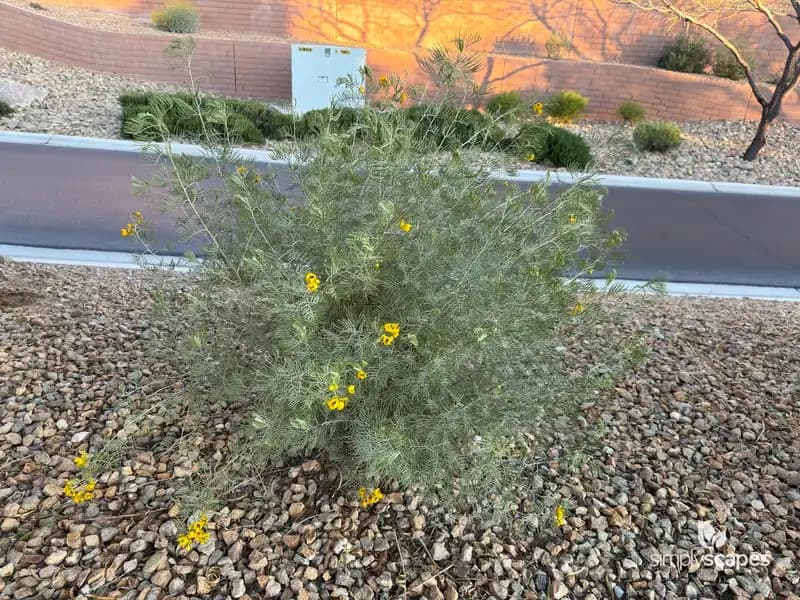
Silver Mimosa
Acacia dealbata
A fast-growing evergreen with stunning silver foliage and fragrant yellow blooms.
- Plant Type
- Flowering Trees
- Width
- 25-33 Ft.
- Height
- 20-50 Ft.
- USDA hardiness zone
- 8 - 10
- Sun requirements
- Full Sun
- Water requirements
- Moderate
Bring your vision to life
The design images above are drag-and-drop ready — place this plant on a photo of your own yard and see it before you plant it.
Create design onlineAbout Silver Mimosa
Silver wattle is a fast-growing evergreen tree or multi-stemmed shrub, valued for finely divided silver-gray foliage and scented yellow flower clusters in winter and early spring. It can create a tall, light-textured canopy in mild climates, but its mature spread, sucker-forming habit, and invasive behavior in California make siting and spread control important.
## Landscape character
The fine, bipinnate leaves give the canopy a soft, fernlike texture, with silver-gray branchlets and new growth. Rounded yellow flower heads are fragrant and appear in the cool season; flattened pods follow. In garden conditions, expect a large plant roughly 20–50 feet tall and 25–33 feet wide. Trees in wetter parts of their native range can become much taller. The open canopy and fast growth can provide shade and wind protection, but this is too large for many small yards.
## Growing conditions
Give silver wattle full sun and well-drained soil; landscape references list clay, loam, sand, and a broad pH range. It grows best in deep, adequately moist soil. Drought reports conflict: South Australia’s garden selector calls it drought tolerant with minimal supplementary watering, while Agriculture Victoria reports low dry-site tolerance in forestry plantings. Do not treat it as a desert plant; water during establishment and prolonged dry spells. The Australian National Botanic Gardens reports frost tolerance near 19°F (-7°C), not a USDA zone rating.
## Regional ecological caution
Kew places its native range in southeastern Australia. In California, Cal-IPC rates silver wattle Moderate and documents it in coastal ranges, the San Francisco Bay area, and the south coast. It spreads by seed and rhizomes and can resprout after cutting. Avoid natural areas in affected regions and follow local invasive-plant guidance; the caution is regional.
## Species identity and sourcing
This is the botanical species, not a named or branded cultivar; no breeder or cultivar patent applies. The RHS lists “silver wattle” and “mimosa” as common names.
## Sources
- Royal Horticultural Society — form, foliage, flowers, size, soil, light, and pruning guidance.
- Botanic Gardens and State Herbarium of South Australia — landscape size, soil, pH, flowering, water, and invasive spread.
- Australian National Botanic Gardens — variable size, foliage, distribution, and frost tolerance.
- Agriculture Victoria — growth rate and dry-site limitations in forestry settings.
- California Invasive Plant Council — California distribution, ecological effects, and risk rating.
- Kew Plants of the World Online — accepted name and native range.
## Maintenance
Control root suckers before they form a colony. Remove dead or hazardous branches after flowering, but avoid hard pruning; the RHS notes that silver wattle resents it. In California, follow local invasive-plant guidance because cut plants may resprout.