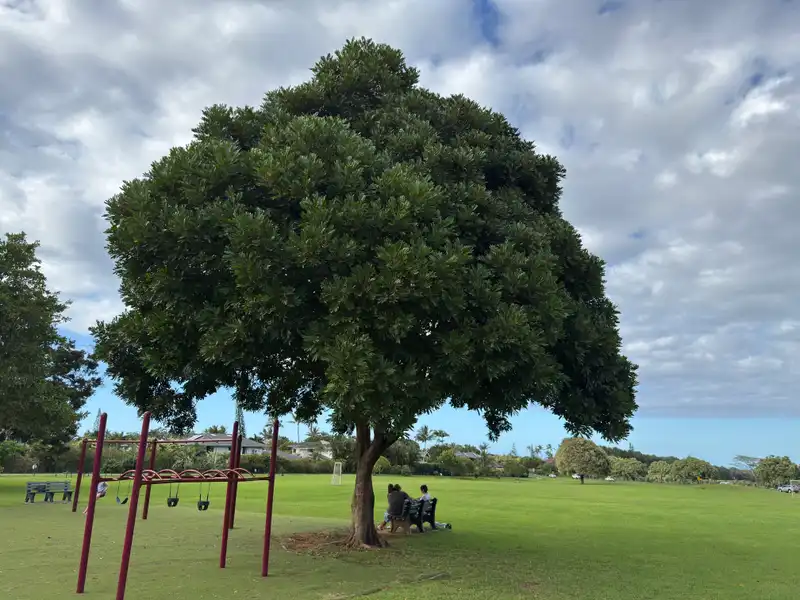
Koa
Acacia koa
- Plant Type
- Shade Trees
- Width
- 20–40 ft
- Height
- 50–80 ft
- USDA hardiness zone
- 10 - 11
- Sun requirements
- Full Sun, Part Shade
- Water requirements
- Moderate
- Design image count
- 1
Design images (1)

Bring your vision to life
The design images above are drag-and-drop ready — place this plant on a photo of your own yard and see it before you plant it.
Create design onlineAbout Koa
Koa is a large evergreen tree native to Hawaiʻi, recognized by its broad crown and curved, gray-green phyllodes. In a suitable warm, sunny site it can become a substantial shade or screening tree, but its eventual spread and easily damaged surface roots call for careful placement.
## Appearance and landscape role
Typical mature trees reach about 50–80 feet tall with a 20–40-foot canopy, though form ranges from an upright single trunk to a low, multi-trunked shape. Small, rounded pale-yellow flower heads can appear through the year; blooming peaks in winter in some areas and shifts with elevation, rainfall, and weather. Flattened brown pods follow. Koa fixes nitrogen and contributes habitat for native birds and insects. Its leaf-like structures are phyllodes—modified stems that function as leaves.
## Site fit
Give koa full sun for best growth; partial sun is tolerated. It needs well-drained soil and is reported from clay, loam, sandy clay, and salt-free sand. Hawaiʻi’s Forestry Service describes its best soils as moderately to well drained and acidic. Established trees can tolerate several dry months, but University of Hawaiʻi guidance recommends monthly water during dry periods, with more frequent irrigation at exposed lowland sites. Koa does not tolerate salty soil, persistent waterlogging, shade, or constant high winds. Its native range spans broad elevations and climates, so a single hardiness-zone value should not be inferred from that range.
## Identity and sourcing
This entry describes the species *Acacia koa*, not a named nursery cultivar or branded series; a cultivar breeder or plant patent therefore does not apply to this record. Koa’s form and site tolerance vary among island and elevation populations. For a landscape planting, ask the nursery where its seed was collected and choose stock suited to the planting site. Koa is a Hawaiian endemic with important forest and cultural value.
## Sources
- [USDA NRCS Koa Plant Fact Sheet](https://plants.usda.gov/DocumentLibrary/factsheet/pdf/fs_acko.pdf) — typical size, flower color and timing, site needs, root sensitivity, and pests.
- [US Forest Service Silvics of North America](https://research.fs.usda.gov/silvics/koa) — Hawaiian distribution, acidic soils, variable flowering, and woodland ecology.
- [University of Hawaiʻi Native Plants database](https://nativeplants.hawaii.edu/plants/acacia-koa/) — landscape uses, water, drought duration, soil preferences, and salt-soil limitations.
- [UH CTAHR Native Plant Propagation Database](https://www3.ctahr.hawaii.edu/hawnprop/plants/aca-koa.htm) — phyllodes, flowers, and species distinctions.
## Maintenance
Protect the shallow surface roots from mowers, string trimmers, and heavy traffic. A broad mulch ring helps limit weed competition and protect the root zone; keep mulch away from the trunk. Once established, water during prolonged dry spells, but avoid overwatering and unnecessary nitrogen fertilizer. Avoid routine pruning: wounds can admit wood-rotting fungi and borers. If a branch creates a safety problem, have it assessed and remove only what is necessary. Watch for koa wilt and twig-borer damage, especially in lower-elevation Hawaiian plantings.