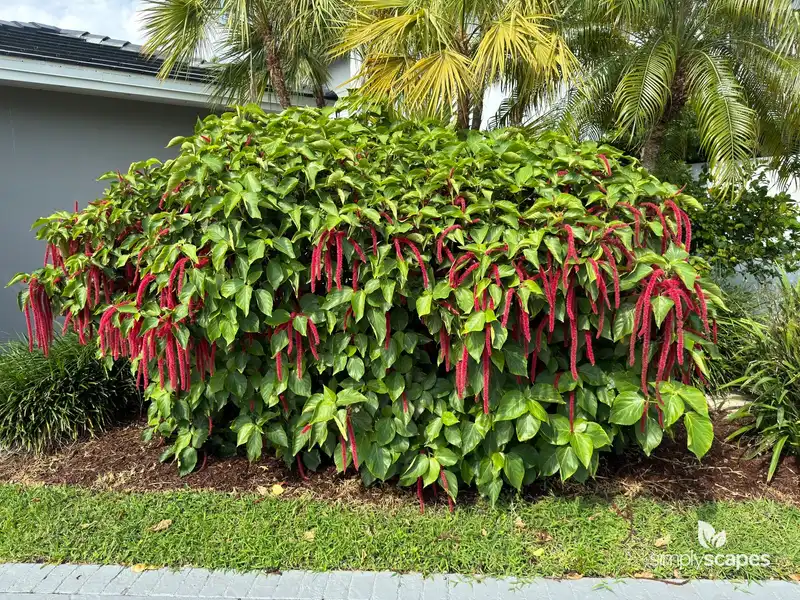
Chenille plant
Acalypha hispida
Exotic tropical shrub featuring striking, fuzzy red tassels and lush green foliage.
- Plant Type
- Shrubs & Roses
- Width
- 6–8 ft
- Height
- 4–6 ft
- USDA hardiness zone
- 10 - 11
- Sun requirements
- Full Sun, Part Shade
- Water requirements
- Moderate
- Design image count
- 5
Design images (5)


Bring your vision to life
The design images above are drag-and-drop ready — place this plant on a photo of your own yard and see it before you plant it.
Create design onlineAbout Chenille plant
Acalypha hispida, usually sold as chenille plant, is a tropical evergreen shrub grown for its long, fuzzy, hanging flower spikes and large green leaves. In frost-free gardens it becomes an upright accent; in colder regions it is best treated as a summer container plant brought under protection before temperatures drop.
## Appearance and landscape role
The familiar tassels are female flower clusters: they are usually crimson red and may reach about 18 inches long. Warm tropical conditions can support flowers year-round, with a summer peak reported in Florida. Broad, heart-shaped leaves with toothed edges create a lush, coarse-textured backdrop. Plants typically reach 4–6 feet tall and 6–8 feet wide in the landscape; older stems can grow taller with support. The pendant blooms are easy to see from a patio or raised container, and the shrub also works as a specimen, border accent, or informal hedge.
## Site fit
Give chenille plant full sun for the strongest flowering, or partial shade where afternoon sun is intense. It prefers evenly moist, well-drained soil and tolerates sand, loam, or clay across a broad pH range. Do not let containers dry out completely, but avoid waterlogged soil. This tropical plant is frost-sensitive; University of Florida guidance lists zones 9B–11B, while North Carolina Extension lists 10A–11B. Outside warm regions, grow it in a pot that can move indoors for winter. Its sap may irritate sensitive skin, and ingestion can cause stomach upset, so place it with household access in mind.
## Identity and sourcing
This entry is for the species *Acalypha hispida*, rather than a named nursery cultivar or branded series. The ornamental plants sold as chenille plant are generally female because those produce the showy tassels. No specific breeder or plant patent applies to this species-level record.
## Sources
- [UF/IFAS Extension: Chenille Plant](https://ask.ifas.ufl.edu/publication/FP004) — landscape size, bloom, site conditions, and uses.
- [North Carolina Extension Plant Toolbox](https://plants.ces.ncsu.edu/plants/acalypha-hispida/common-name/chenille-plant/) — identity, size, light, soils, and hardiness.
- [University of Wisconsin Extension: Chenille Plant](https://hort.extension.wisc.edu/articles/chenille-plant-acalypha-hispida/) — cold sensitivity, container culture, and contact precautions.
- [Singapore NParks Flora & Fauna Web](https://www.nparks.gov.sg/florafaunaweb/flora/1/5/1586) — tropical growth, flowering, and pollination.
## Maintenance
Keep the root zone consistently moist during warm weather and water container plants before the mix dries completely. Apply a balanced fertilizer during active growth when growing in a pot. After flowering, prune to hold the shrub to its allotted space; occasional pinching can encourage a fuller shape. Remove spent tassels if their browning detracts from the display. Check periodically for spider mites, whiteflies, mealybugs, and scale, especially on indoor or sheltered plants. Move containers to a bright, warm place before frost; reduce watering and feeding during a cool indoor rest.