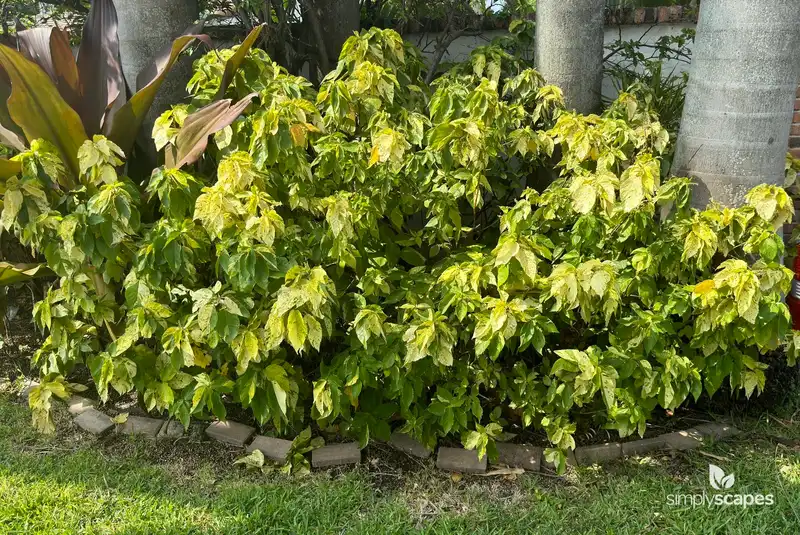
Copperleaf
Acalypha wilkesiana
A vibrant tropical shrub with spectacular coppery-red foliage for bold garden accents.
- Plant Type
- Shrubs & Roses
- Width
- 6-8 Ft.
- Height
- 8-12 Ft.
- USDA hardiness zone
- 9 - 11
- Sun requirements
- Full Sun, Part Shade
- Water requirements
- Moderate
- Design image count
- 6
Design images (6)


Bring your vision to life
The design images above are drag-and-drop ready — place this plant on a photo of your own yard and see it before you plant it.
Create design onlineAbout Copperleaf
Copperleaf (*Acalypha wilkesiana*) is a fast-growing tropical evergreen shrub grown mainly for bold foliage, with colors and patterns that vary by cultivar. It brings year-round color to warm-climate borders and containers, and can serve as a hedge or screen where its mature size fits.
## Landscape role
The species can reach about 8–12 feet tall and 6–8 feet wide, though named selections range from compact forms to large shrubs. Its 4–8 inch heart-shaped leaves may be mottled in bronze, red, maroon, green, yellow, orange, pink, or white; the exact colors depend on the selection. Long, fuzzy flower spikes are usually secondary to the foliage. Use it as a deliberate accent or in a measured group because the strong leaf colors can dominate a planting. [UF/IFAS Extension](https://ask.ifas.ufl.edu/publication/FP006) lists borders, hedges, screens, mass plantings, containers, and accents as landscape uses.
## Growing conditions
Native to Fiji and nearby South Pacific islands, copperleaf suits frost-free tropical and subtropical gardens; UF/IFAS gives USDA zones 9B–11B. Full sun brings out stronger foliage color, while the shrub tolerates partial shade. Plant in well-drained soil; UF/IFAS lists sand or loam and acidic to slightly alkaline conditions. It has moderate drought tolerance but looks best with regular water during dry spells. Salt tolerance is reported as unknown, so the available evidence does not support using it as a salt-tolerant coastal plant.
## Identity and sourcing
This catalog entry is for the species, not a named cultivar, so its mature size and leaf colors are variable. [NC State Extension](https://plants.ces.ncsu.edu/plants/acalypha-wilkesiana/) describes its foliage range and container uses; [Texas Tech Plant Resources](https://www.depts.ttu.edu/plantresources/Pages/directories/landscape-info-sheets/herbaceous-info/Acalypha_wilkesiana.php) also lists it for warm-climate beds and containers. No cultivar-specific breeder, brand, or patent is identified for this species-level record in the reviewed sources.
## Maintenance
Expect occasional shaping, especially if you grow it as a hedge or screen. Water during dry spells to keep the foliage looking its best, and choose a well-drained site; Texas Tech notes susceptibility to root rot. Cold snaps can damage this tropical shrub, so in cooler climates grow it in a container that can be protected or treat it as a seasonal plant. Aphids, mites, whiteflies, and scales may occur, though UF/IFAS reports no diseases of major concern.