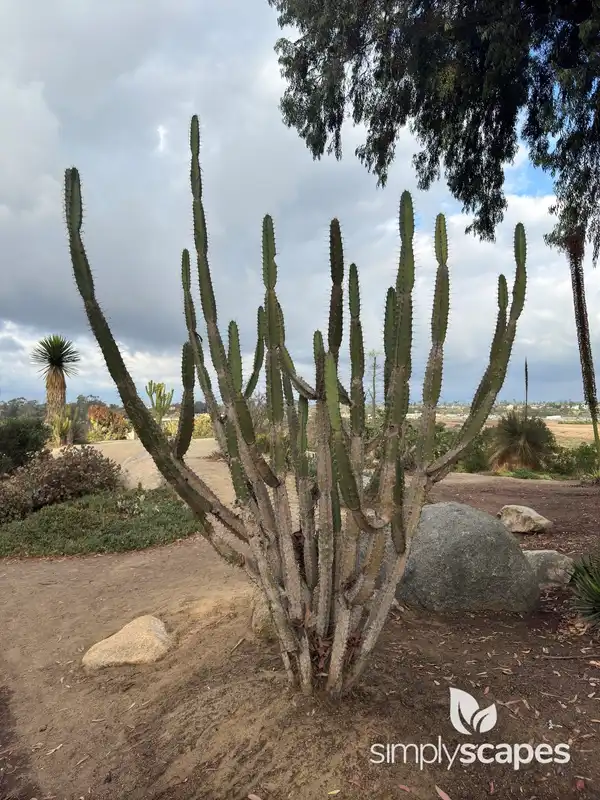
Triangle Cactus
Acanthocereus tetragonus
A tall, night-blooming cactus with striking architectural stems.
- Plant Type
- Succulents
- Width
- 3-12 Ft.
- Height
- 3-20 Ft.
- USDA hardiness zone
- 9 - 11
- Sun requirements
- Full Sun, Part Shade
Bring your vision to life
The design images above are drag-and-drop ready — place this plant on a photo of your own yard and see it before you plant it.
Create design onlineAbout Triangle Cactus
Triangle cactus (*Acanthocereus tetragonus*) is a fast-growing, spiny cactus with dark green, three- to five-ribbed stems that arch or scramble into nearby vegetation. It produces large white flowers at night and bright red fruit, and may stay relatively low when unsupported or climb much higher where it finds support.
## Landscape character
Reserve room for the mature plant rather than placing it beside a path or regular work area. The [Bishop Museum](https://plantsofhawaii.org/detail/%7BC87C7B0F-AB76-4CD0-AEAA-3B3A6FEE4036%7D) describes plants usually 1–2 m tall when not climbing and records stems 5–6 m high in surrounding trees; stems can grow rapidly. The angular, armed structure gives this cactus strong architectural texture for a warm-climate specimen planting. Its bright red, oval fruit is described as sweet and edible, though the spines make handling difficult.
## Habitat and ecology
[Kew’s Plants of the World Online](https://powo.science.kew.org/taxon/urn:lsid:ipni.org:names:1646-2) accepts the species and lists its native range from southern Florida and the Caribbean to southern Texas and Venezuela, chiefly in seasonally dry tropical habitats. The Bishop Museum records it in sandy thickets, hammocks, and coastal bottomlands. Coastal occurrence alone does not establish salt-spray or saline-soil tolerance. The [Hawaiʻi Pacific Weed Risk Assessment](https://plantpono.org/wp-content/uploads/Acanthocereus-tetragonus.pdf), citing a Texas field guide, notes that it thrives on semiarid coastal plains while tolerating more moisture than many cacti. That supports dry-garden use but does not provide a precise irrigation schedule.
The Bishop Museum lists this cactus as naturalized on Kauaʻi, and the Hawaiʻi assessment rates it high risk. Its invasive status depends on location, so check local guidance before planting near natural areas. This is a species-level record; I found no specific breeder, commercial brand, or plant patent to attribute.
## Maintenance
Choose a warm site with sharply drained, sandy soil and protect the plant from freezing temperatures. Give the arching stems room to develop and keep them clear of pedestrian routes. Wear puncture-resistant gloves and eye protection when pruning or moving cuttings. Seeds and stem fragments can spread the plant, so contain discarded material and check local invasive-plant rules.