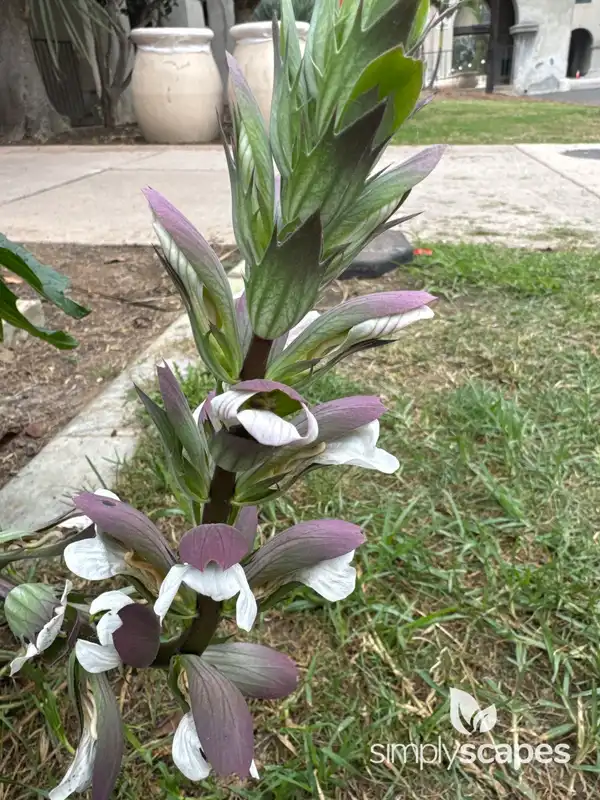
Acanthus
Acanthus
Architectural foliage and striking flower spikes for dramatic borders.
- Plant Type
- Perennials & Annuals
- Width
- 3-4 Ft.
- Height
- 3-5 Ft.
- USDA hardiness zone
- 6 - 10
- Sun requirements
- Full Sun, Part Shade, Full Shade
Bring your vision to life
The design images above are drag-and-drop ready — place this plant on a photo of your own yard and see it before you plant it.
Create design onlineAbout Acanthus
Bear’s breeches (*Acanthus*) brings broad, deeply lobed leaves and tall flower spikes to a spacious border. This genus-level entry is a useful design reference, while exact size, flower color, leaf spines, and winter behavior depend on the species or cultivar.
## Landscape profile
Acanthus species are mostly herbaceous perennials with bold foliage and upright flowering stems. The [University of Arizona Cooperative Extension guide](https://extension.arizona.edu/sites/extension.arizona.edu/files/attachment/july-2020.pdf) describes roughly 20 species and notes that some have sharp leaf spines. The common *A. mollis* is one example: the [Royal Horticultural Society profile](https://www.rhs.org.uk/plants/155/acanthus-mollis/details) gives 1–1.5 m for height and spread and describes white flowers with dusky-purple bracts. Use large leaves as a backdrop in a spacious border, and site spiny types away from paths.
## Growing conditions
For the genus, Arizona Extension recommends rich, light, well-drained soil and careful watering through warm weather; saturated soil can damage roots. The RHS reports that *A. mollis* grows in full sun, partial shade, or shade and has drought resistance once established. Treat that as species-specific guidance, not a guarantee for every Acanthus. Kew’s [Plants of the World Online record](https://powo.science.kew.org/taxon/urn:lsid:ipni.org:names:44892-1/general-information) recognizes *A. mollis* as an accepted species native from northwest Africa through the eastern Mediterranean.
## Cultivar and patent
This record covers the genus rather than a named cultivar or branded series, so no single breeder or plant patent applies. Check named cultivars individually because their traits and intellectual-property status can differ.
## Maintenance
Give the plant permanent room: established roots can spread, and pieces left in the soil may resprout. Remove unwanted shoots while small. Cut old flower stems after bloom, or earlier if you want to limit seed spread; wear gloves when working around spiny species. Avoid moving an established clump unless you can remove the roots thoroughly.