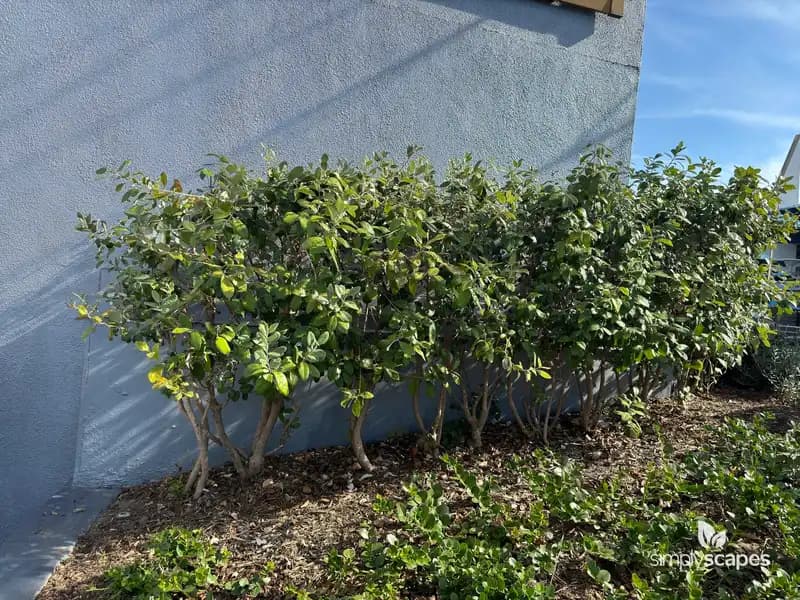
Pineapple Guava
Feijoa sellowiana
A versatile evergreen with exotic flowers and delicious tropical fruit.
- Plant Type
- Shrubs & Roses
- Width
- 10-15 Ft.
- Height
- 10-15 Ft.
- USDA hardiness zone
- 8 - 11
- Sun requirements
- Full Sun, Part Shade
Bring your vision to life
The design images above are drag-and-drop ready — place this plant on a photo of your own yard and see it before you plant it.
Create design onlineAbout Pineapple Guava
Pineapple guava (*Feijoa sellowiana*, widely listed in horticulture as *Acca sellowiana*) is a slow-growing evergreen shrub or small tree with leathery green leaves and silvery undersides. It adds fragrant, edible red-and-white flowers in spring and edible fruit later in the season, though fruiting and fruit quality vary among plants and cultivars.
## Landscape role
The [UF/IFAS landscaping guide](https://edis.ifas.ufl.edu/publication/EP618/pdf) describes an open-grown plant about 10–15 ft tall and wide, with a smaller profile when clipped as a hedge. Its evergreen canopy, pale leaf undersides, blossoms, and fruit make it useful as a screen, hedge, or edible ornamental. The same guide describes growing it as a single- or multi-trunk small tree. Give it room if you want an open form; a clipped hedge needs more frequent shaping.
## Flowers and fruit
In Florida, flowers usually open in spring and may continue for several weeks, depending on cultivar. The petals are edible, and the flowers are fragrant. Ovoid fruit ripen later, often falling when ready to eat; the [UF/IFAS fruit-growing guide](https://edis.ifas.ufl.edu/publication/HS1424/pdf) describes a pineapple-like aroma with sweet-sour fruit notes. Bees and birds contribute to pollination. Most named cultivars are only partly self-fertile, so a second compatible feijoa can improve fruit set. Because this catalog entry identifies the species rather than a particular cultivar, expect variation in crop size, timing, and flavor.
## Growing conditions
Plant in full sun or partial shade and well-drained soil; UF/IFAS gives a preferred soil pH of 5.5–7.0 and a general USDA range of zones 8–11. Established plants can grow without routine supplemental irrigation, but prolonged dry periods may cause fruit and leaves to drop. Feijoa tolerates coastal salt spray, while very hot, dry weather can damage fruit. Protect it from strong winds where fruit production matters.
## Name and cultivar status
The [Royal Botanic Gardens, Kew](https://powo.science.kew.org/taxon/urn:lsid:ipni.org:names:596467-1) currently accepts *Feijoa sellowiana* and lists *Acca sellowiana* as a synonym. This species-level record has no named breeder or brand; cultivar-specific patent details cannot be assigned without a cultivar name.
## Maintenance
Prune after fruiting to maintain a tree shape or hedge outline; open-grown plants need little routine pruning. Feijoa has shallow roots, so mulch the root zone and avoid digging around it. Let the first ripe fruit fall to learn the local harvest window, then gather fallen fruit regularly if you want to limit litter.