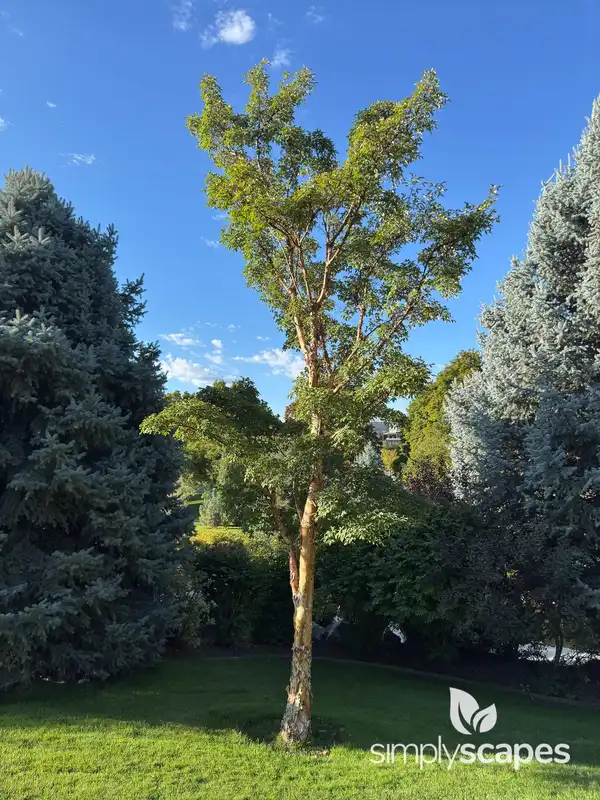
Paperbark Maple Tree
Acer griseum
A stunning small tree with peeling copper bark and vibrant autumn color.
- Plant Type
- Shade Trees
- Width
- 15-25 Ft.
- Height
- 20-30 Ft.
- USDA hardiness zone
- 4 - 8
- Sun requirements
- Full Sun, Part Shade
- Water requirements
- Medium
- Design image count
- 2
Design images (2)


Bring your vision to life
The design images above are drag-and-drop ready — place this plant on a photo of your own yard and see it before you plant it.
Create design onlineAbout Paperbark Maple Tree
Paperbark maple (*Acer griseum*) is a slow-growing, small deciduous tree whose curling cinnamon-brown bark stays attractive through winter. Its three-part leaves, modest spring flowers, and variable red-to-bronze autumn color make it a distinctive specimen for a small yard, patio edge, or mixed garden.
## Landscape character
Plan for roughly **20–30 feet tall and 15–25 feet wide**. The crown is usually upright and oval, sometimes irregular or multi-stemmed. Its signature is exfoliating cinnamon to reddish-brown bark that peels in thin, papery curls and often remains attached. The leaves have three leaflets, dark green above and pale gray-green beneath. Small greenish-yellow flowers appear as leaves expand but are easy to overlook. Fall color varies by year and can range from bronze or orange to red; this species is among the later maples to color. The [North Carolina Extension profile](https://plants.ces.ncsu.edu/plants/acer-griseum/) and [Oregon State Landscape Plants](https://landscapeplants.oregonstate.edu/plants/acer-griseum) describe its form and seasonal features.
## Growing conditions
Full sun or partial shade suits paperbark maple. Give it moist, well-drained soil; it grows in sand, loam, or clay and tolerates a broad range of soil pH. North Carolina State lists USDA Zones **4a–8b**; Oregon State lists Zone 4. The [Morton Arboretum profile](https://mortonarb.org/plant-and-protect/trees-and-plants/paper-barked-maple/) rates it moderately sensitive to drought, so water new trees through establishment and during extended dry periods rather than treating it as a dry-garden maple. Morton lists tolerance to road salt, but that does not establish tolerance to coastal salt spray. Avoid persistently waterlogged soil even though the Morton profile also lists wet-site tolerance.
## Species and sourcing
This species is native to central China. It is a species-level catalog entry, not a named trademarked selection, so no separate breeder, brand, or cultivar patent applies here. Do not confuse it with named hybrids such as ‘Ginzam’ (GINGERBREAD™), which are separate plants. [The University of Connecticut Plant Database](https://plantdatabase.uconn.edu/detail.php?pid=15) describes its slow growth, specimen use, and strong bark interest.
## Maintenance
Its slow growth and few serious pest problems keep routine care modest. Water while the root system establishes and check soil moisture during prolonged drought. Prune only to remove dead, damaged, or crossing branches; avoid spring pruning because maples can bleed sap at that time. Verticillium wilt is a potential maple disease, so avoid planting in poorly drained soil and watch for sudden branch dieback.