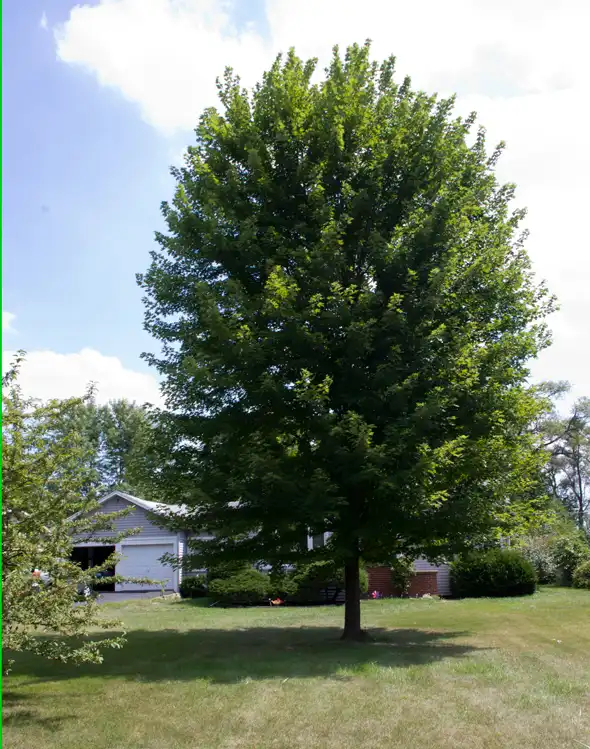
Maple Tree
Acer
Elegant deciduous trees famous for their stunning autumn colors and unique winged seeds.
- Plant Type
- Shade Trees
- Width
- 30-45 Ft.
- Height
- 30-45 Ft.
- USDA hardiness zone
- 3 - 9
- Sun requirements
- Part Shade, Full Sun
- Water requirements
- Medium
- Design image count
- 9
Design images (9)


Bring your vision to life
The design images above are drag-and-drop ready — place this plant on a photo of your own yard and see it before you plant it.
Create design onlineAbout Maple Tree
Maples are woody trees and shrubs in the genus *Acer*, valued for their varied leaf shapes, shade, and seasonal color. A genus-level listing cannot predict one mature size or site tolerance, so choose a species or cultivar matched to your climate, soil, and available space.
## Landscape role
Maples range from compact ornamental trees and large shrubs to substantial canopy trees. The [NC State Extension Plant Toolbox](https://plants.ces.ncsu.edu/plants/acer/) describes multistemmed shrubs up to about 35 ft and many tree species around 35–150 ft tall. This catalog entry represents a mid-sized shade-tree form; its existing 30–45 ft display range is not a limit for the genus. Depending on the selection, maples can provide shade, a focal specimen, bonsai material, or foliage and texture in a small garden.
## Foliage and seasonal interest
Most maples are deciduous, with opposite leaves that are often palmately lobed; there are exceptions to both traits. Leaf shape, size, and summer color vary widely. Many deciduous species develop yellow, orange, or red autumn color, but the timing and intensity depend on species, cultivar, weather, and site. Some selections are grown for patterned or unusually shaped leaves, while others are chosen for a broad shade canopy.
## Choosing a site
Most landscape maples grow in full sun or partial shade and prefer well-drained soil, but individual species can need filtered shade, wetter ground, or different soil chemistry. [Utah State University Extension](https://extension.usu.edu/yardandgarden/research/maples-in-the-landscape/) notes that high-pH soils can cause iron chlorosis in susceptible maples, while other species tolerate alkaline and dry conditions. Match the exact selection to local winter temperatures, summer heat, drainage, soil pH, mature spread, and nearby pavement or utilities.
## Establishment and health
Set the root flare at or slightly above soil level, water consistently while a new tree establishes, and mulch without piling material against the trunk. Maples generally provide shade and foliage rather than showy flowers. Some species produce abundant winged seeds, and species-specific issues can include surface roots, brittle limbs, iron chlorosis, pests, and Verticillium wilt. Confirm those traits for the chosen species or cultivar before planting.
## Maintenance
After young-tree structure is established, most maples need only occasional pruning to remove dead, damaged, or crossing branches. Water needs, pruning timing, cleanup, and pest management differ among species and climates; use local extension advice for the selected maple. No single maintenance level is assigned to the whole genus.