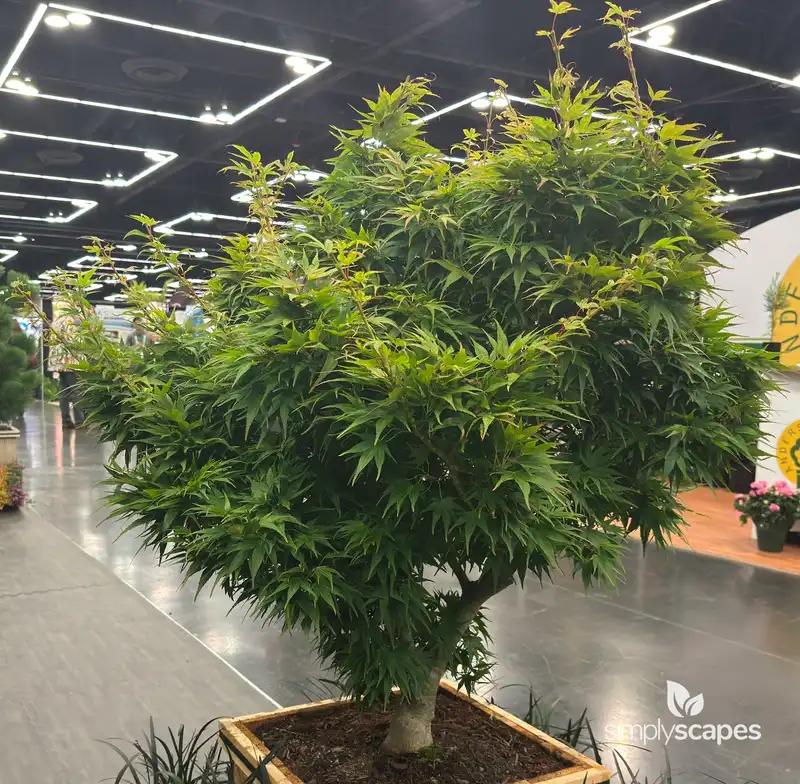
Mikawa Yatsubusa Dwarf Japanese Maple
Acer palmatum 'Mikawa yatsubusa'
A stunning dwarf Japanese maple with unique layered foliage and fiery fall color.
- Plant Type
- Shade Trees
- Width
- 3-4 Ft.
- Height
- 4–8 Ft.
- USDA hardiness zone
- 5 - 9
- Sun requirements
- Full Sun, Part Shade
- Design image count
- 5
Design images (5)


Bring your vision to life
The design images above are drag-and-drop ready — place this plant on a photo of your own yard and see it before you plant it.
Create design onlineAbout Mikawa Yatsubusa Dwarf Japanese Maple
Acer palmatum ‘Mikawa yatsubusa’ is a slow-growing dwarf Japanese maple with dense branching and distinctive, layered leaves. Its compact scale suits a small garden, container, or bonsai training, while its foliage adds color from spring through fall.
## Foliage and landscape use
Leaves emerge yellow-green, deepen to green in summer, then turn yellow-gold with red edges in fall. NC State Extension describes a mature size around 4–6 ft tall and 4 ft wide and notes its use in containers and bonsai. [Patterson Nursery Sales](https://www.pattersonnurserysales.com/catalog-pages/acer-palmatum-mikawa-yatsubusa) lists a larger 6–8 ft height and 36–42 in width, so allow for local conditions and time.
## Siting and soil
Plant in partial shade to full sun in moist, well-drained, acid to neutral soil. NC State reports better heat tolerance than many Japanese maples, but drought, wind, or underwatering can scorch leaves; consistent moisture and shelter help through hot or dry spells. See [NC State Extension](https://plants.ces.ncsu.edu/plants/acer-palmatum-mikawa-yatsubusa/) for cultivar-specific guidance.
## Maintenance
Water regularly during establishment and dry weather. Inspect for aphids and chewing insects, and prune selectively to remove damaged or crossing branches while preserving the layered form.