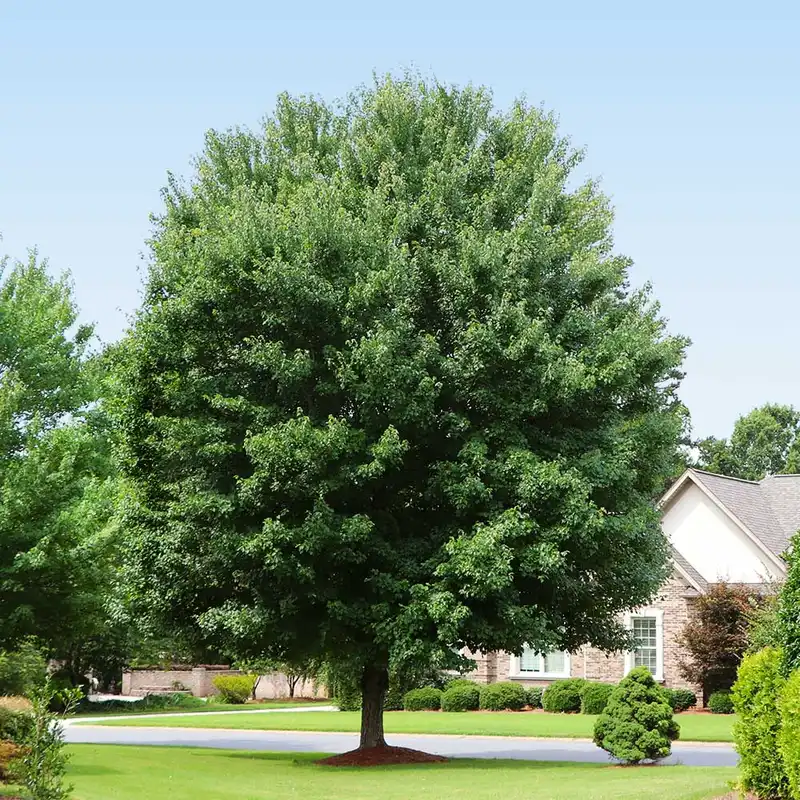
Brandywine Red Maple
Acer rubrum 'Brandywine'
A seedless red maple with spectacular, long-lasting scarlet-to-purple fall color.
- Plant Type
- Shade Trees
- Width
- 30–40 ft
- Height
- 40–50 ft
- USDA hardiness zone
- 4 - 8
- Sun requirements
- Full Sun, Part Shade
- Design image count
- 2
Design images (2)


Bring your vision to life
The design images above are drag-and-drop ready — place this plant on a photo of your own yard and see it before you plant it.
Create design onlineAbout Brandywine Red Maple
‘Brandywine’ is a male red maple selection released by the U.S. National Arboretum in 1994 for long-lasting red-to-purple-red fall color. Its flowers are male, so it does not set fruit or samaras that can become volunteer seedlings. The oval crown suits lawns, streets, parks, and other roomy shade-tree sites; the [U.S. National Arboretum](https://www.usna.usda.gov/assets/images/as_standard_image/Acer_rubrum_Brandywine.pdf) and [J. Frank Schmidt & Son](https://jfschmidt.com/all-trees/brandywine-maple/) document the named cultivar.
## Landscape use and seasonal interest
Dark-green summer foliage turns deep red, then red-purple, over a long fall display; the Arboretum reports 14 days or more under its Maryland conditions. Small male flowers appear in early spring before leaves emerge. The Arboretum identifies the parentage as ‘October Glory’ × ‘Autumn Flame’ and records the 1994 release.
## Size and siting
The breeder lists about 40 feet tall by 30 feet wide, while an Extension expert describes mature trees around 50 by 40 feet. The Arboretum measured 25 × 12 feet at 12 years, which is a young-tree measurement rather than a mature-size estimate. Plan for roughly 40–50 feet tall and 30–40 feet wide. Plant in full sun or partial shade. Species-level red maple guidance favors moist, slightly acidic soil; allow room for a broad mature canopy.
## Maintenance
Water young trees regularly while roots establish and during prolonged dry periods. Keep mulch away from the trunk and protect the bark from lawn equipment. Prune selectively to maintain sound branch structure; leave enough space for the tree’s mature canopy.