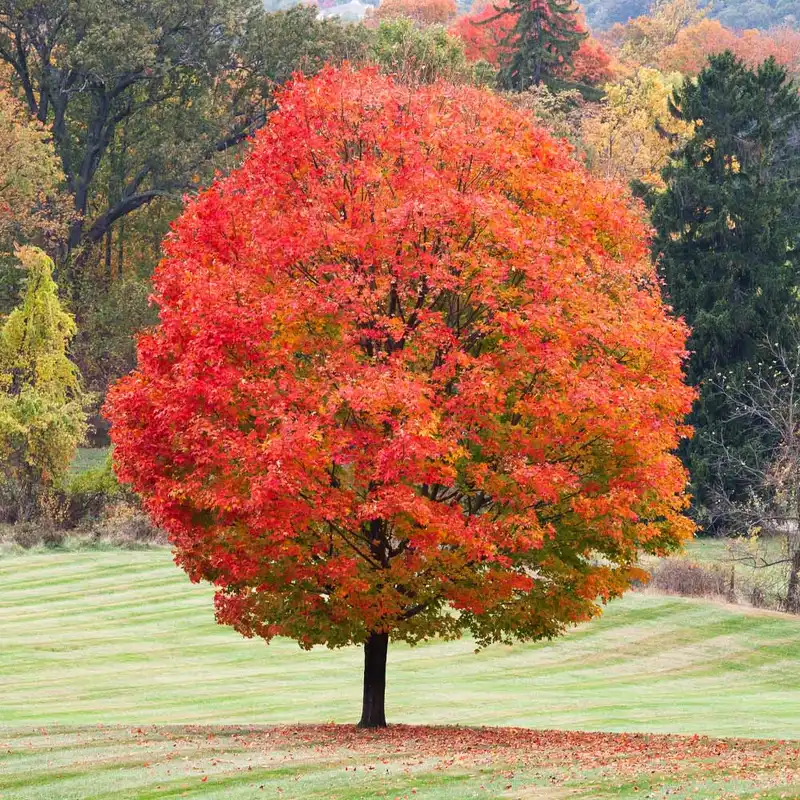
Sugar Maple Tree
Acer saccharum
The iconic source of maple syrup with breathtaking, fiery autumn foliage for large landscapes.
- Plant Type
- Shade Trees
- Width
- 30-50 Ft.
- Height
- 55-75 Ft.
- USDA hardiness zone
- 3 - 8
- Sun requirements
- Full Sun, Part Shade
- Design image count
- 4
Design images (4)


Bring your vision to life
The design images above are drag-and-drop ready — place this plant on a photo of your own yard and see it before you plant it.
Create design onlineAbout Sugar Maple Tree
Sugar maple (Acer saccharum) is a long-lived, deciduous North American canopy tree with a dense, rounded crown and five-lobed leaves. Its autumn foliage varies from yellow and orange to red, and its sap is the principal commercial source of maple syrup. [University of Minnesota Urban Forestry](https://trees.umn.edu/sugar-maple-acer-saccharum)
## Landscape Use and Seasonal Interest
Use sugar maple as a large shade or specimen tree in a lawn, park, or other open setting. Small greenish-yellow flowers appear in spring, followed by paired winged seeds; the best-known display is fall foliage. The species also supports insect pollinators, birds, and small mammals. [NC State Extension](https://plants.ces.ncsu.edu/plants/acer-saccharum/common-name/sugar-maple/) describes its flowers and foliage, while [Minnesota’s UFOR Nursery](https://trees.umn.edu/sugar-maple-acer-saccharum) notes its specimen use and wildlife associations.
## Mature Size and Siting
A typical mature tree is about 40–80 feet tall and 30–60 feet wide, with wider or taller trees possible. University of Minnesota lists USDA Zones 3–8. Provide full sun to part shade and substantial root and canopy space; its dense shade can limit turf and understory planting.
## Soil and Water
Sugar maple grows best in moist, fertile, well-drained, slightly acidic soil. It tolerates shade, but heat, drought, compacted soil, air pollution, and deicing salt can cause stress, especially in exposed urban sites.
## Maintenance
Water during establishment and protect the root zone from compaction and road salt. Choose an open site with room for the mature crown; formative pruning can help maintain a sound central structure and needed clearance.