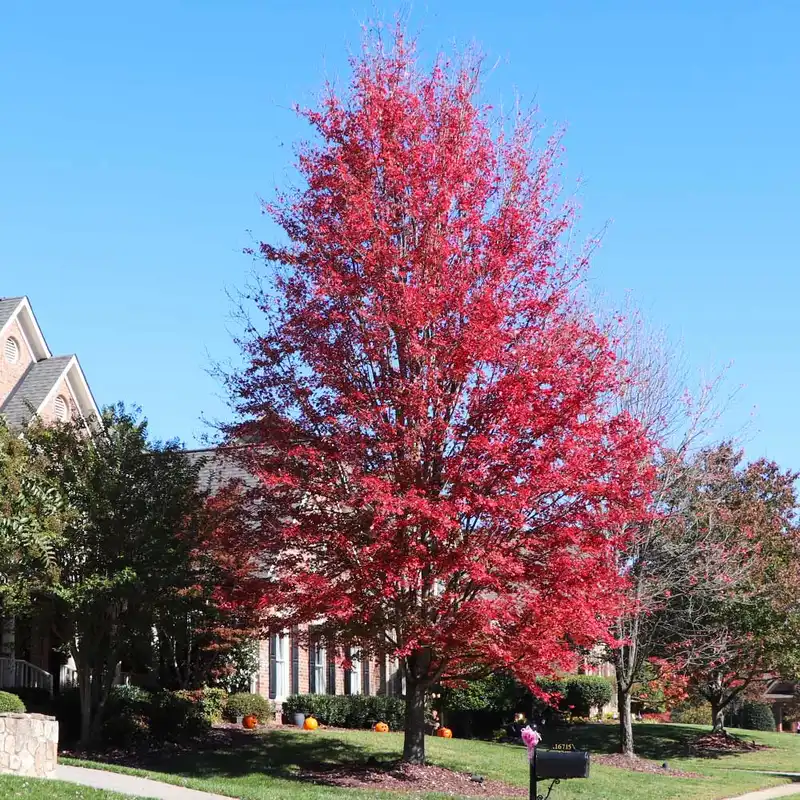
Celebration® Freeman Maple
Acer x freemanii 'Celzam'
A fast-growing, nearly seedless Freeman maple with an upright crown and red-and-yellow fall foliage.
- Plant Type
- Shade Trees
- Width
- 25 Ft.
- Height
- 40-50 Ft.
- USDA hardiness zone
- 4 - 8
- Sun requirements
- Full Sun, Part Shade
- Design image count
- 2
Design images (2)


Bring your vision to life
The design images above are drag-and-drop ready — place this plant on a photo of your own yard and see it before you plant it.
Create design onlineAbout Celebration® Freeman Maple
Celebration® Freeman maple is the trade name used for the patented 'Celzam' cultivar, a cross between red maple and silver maple. Its upright, conical crown grows quickly, with deeply lobed green leaves that turn red and yellow in fall; small reddish flowers appear in early spring. [Dawes Arboretum](https://dawesarb.arboretumexplorer.org/taxon-19774.aspx) and the [Royal Horticultural Society](https://www.rhs.org.uk/plants/159723/acer-%C3%97-freemanii-celzam/details) use 'Celzam' for Celebration Freeman maple.
## Landscape use and seasonal interest
The strong branch angles and nearly seedless fruiting make this a practical shade tree for parks, streets, and large yards. Its autumn display combines red and yellow foliage, while the deeply cut leaves give the canopy texture through the growing season. The RHS reports a mature height of 8–12 m and spread of 4–8 m; [Willamette Nurseries](https://www.willamettenurseries.com/products/celebration%C2%AE-red-maple) lists height up to 45 feet and hardiness in zones 4–8. Mature spread estimates vary among sources, so leave generous room for a broad canopy.
## Siting
Grow in full sun or partial shade. The RHS lists clay, sand, and loam soils, provided they remain moist but well drained. This large deciduous hybrid works best where its roots and crown have room to develop.
## Maintenance
Keep young trees evenly watered while they establish, without leaving the soil waterlogged. Pruning is only needed when necessary; the RHS recommends pruning from late autumn to midwinter.