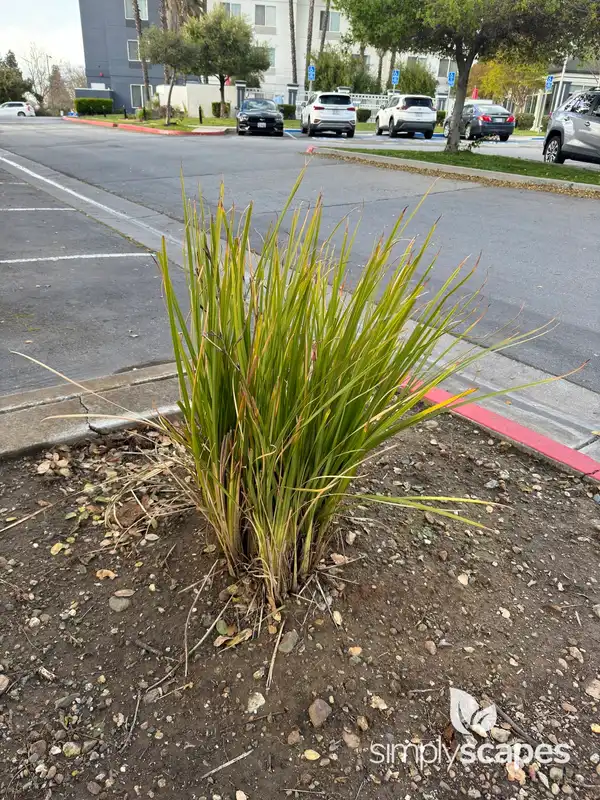
Sweet flag
Acorus calamus
A fragrant, iris-like aquatic perennial perfect for boggy water gardens.
- Plant Type
- Perennials & Annuals
- Width
- 1.5-3 Ft.
- Height
- 2-5 Ft.
- USDA hardiness zone
- 4 - 10
- Sun requirements
- Full Sun, Part Shade
- Design image count
- 4
Design images (4)


Bring your vision to life
The design images above are drag-and-drop ready — place this plant on a photo of your own yard and see it before you plant it.
Create design onlineAbout Sweet flag
Sweet flag is a wetland perennial grown for its upright fans of narrow, sword-shaped green leaves. The foliage and creeping rhizomes are aromatic when crushed, and the plant suits pond margins, bog gardens, and other persistently wet sites.
## Landscape use and appearance
Use it as a foliage accent beside water or in a rain garden where soil remains wet. It also grows in shallow standing water. Yellow-green spadices may appear in late spring, but NC State Extension describes the species as non-flowering in typical garden conditions; its ornamental value is chiefly the grassy foliage.
## Size and siting
NC State Extension lists a height of 2–2.5 feet and a width of 1.5–2 feet; Singapore's NParks gives a maximum crown width and height of about 1 m and notes plants may reach 1.5 m while spreading by creeping rhizomes. These source estimates differ; plan for a spreading clump rather than a fixed compact footprint. It is listed for USDA Zones 4–10. Grow in full sun or partial shade.
## Soil and water
Keep the root zone consistently wet. It grows in boggy soil and tolerates shallow water; NC State advises planting rhizomes in containers set at the water's edge or in shallow water to control spread. Kew accepts the name Acorus calamus and places it in Acoraceae.
Sources: [NC State Extension](https://plants.ces.ncsu.edu/plants/acorus-calamus/common-name/eurasian-sweet-flag/), [NParks](https://www.nparks.gov.sg/florafaunaweb/flora/3/4/3491), and [Kew Plants of the World Online](https://powo.science.kew.org/taxon/urn:lsid:ipni.org:names:84009-1).
## Maintenance
Use a container or other containment where you want a defined planting; creeping rhizomes can naturalize and form colonies. Keep the soil wet to reduce leaf scorch.