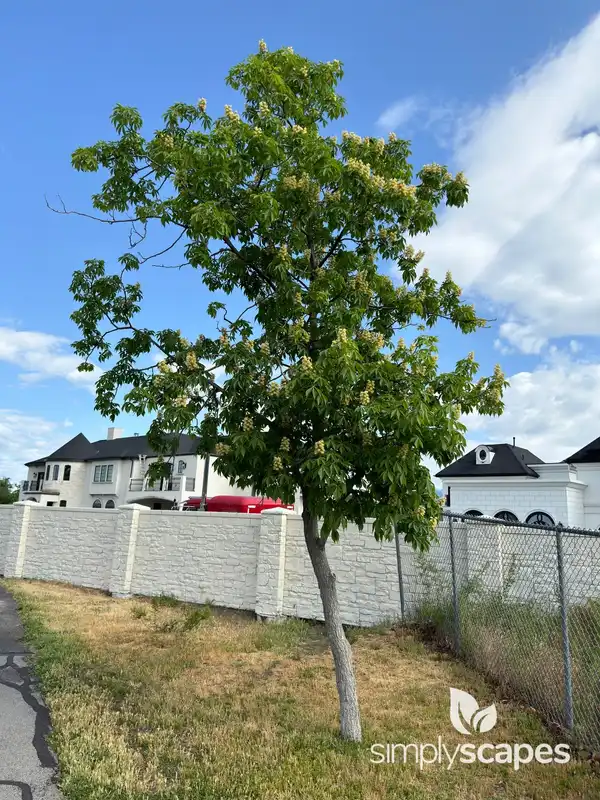
Buckeye Tree
Aesculus
Majestic deciduous trees with showy flower candles and iconic palmate leaves.
- Plant Type
- Shade Trees
- Width
- 20-40 Ft.
- Height
- 20-40 Ft.
- USDA hardiness zone
- 3 - 7
- Sun requirements
- Full Sun, Part Shade
- Design image count
- 3
Design images (3)


Bring your vision to life
The design images above are drag-and-drop ready — place this plant on a photo of your own yard and see it before you plant it.
Create design onlineAbout Buckeye Tree
Buckeyes and horse chestnuts (Aesculus) are deciduous trees and shrubs with opposite, palmately compound leaves and showy flowers held in upright clusters. Species range from low shrubs to large shade trees, and their flowers, mature size, bloom timing, and fruit differ widely.
## Landscape Use
The genus includes plants for different landscape scales: smaller shrub forms can suit garden borders, while larger tree species need room for broad crowns. Choose a species or named cultivar before planning mature spacing, hardiness, or seasonal color. Royal Botanic Gardens Victoria’s [HortFlora genus profile](https://hortflora.rbg.vic.gov.au/taxon/ad9c3c52-5340-11e7-b82b-005056b0018f) describes the shared palmate foliage, upright flower clusters, and capsule fruit, while [Oregon State University’s Landscape Plants profile](https://landscapeplants.oregonstate.edu/aesculus) notes that flowers may be white, yellow, pink, or red and that fruit capsules vary in surface and seed number.
## Growing Conditions
Full sun to partial shade is suitable for several commonly grown Aesculus, but light preference and performance depend on species and climate. Soil moisture, mature size, and cold hardiness also vary; the genus spans North America, Europe, and Asia. The [Royal Botanic Gardens, Kew](https://powo.science.kew.org/taxon/urn:lsid:ipni.org:names:36263-1) lists 12 accepted species with a broad native range, so use a species-level profile when selecting a plant for a particular site.
## Maintenance
Care depends on the selected species or cultivar. Confirm its mature form, local hardiness, pruning needs, and fruit characteristics before planting, and give large tree forms enough room to develop.