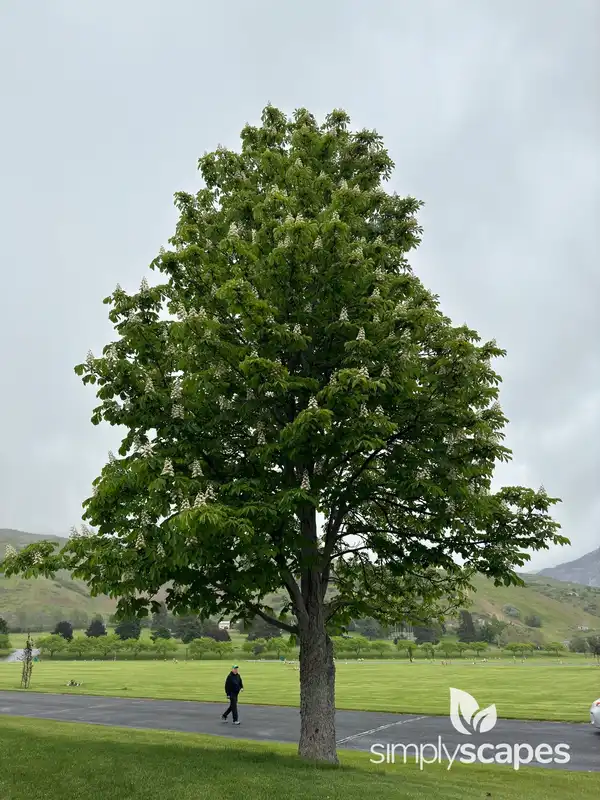
Horse Chestnut Tree
Aesculus hippocastanum
A majestic shade tree with showy white flower spires and iconic palmate leaves.
- Plant Type
- Shade Trees
- Width
- 40-70 Ft.
- Height
- 50-70 Ft.
- USDA hardiness zone
- 3 - 8
- Sun requirements
- Full Sun, Part Shade
- Design image count
- 3
Design images (3)


Bring your vision to life
The design images above are drag-and-drop ready — place this plant on a photo of your own yard and see it before you plant it.
Create design onlineAbout Horse Chestnut Tree
Horse chestnut is a large deciduous tree with a broad, rounded crown, palmate leaves and conspicuous flower panicles. Its eventual size and dense shade make it best suited to spacious parks and large gardens.
## Form and Seasonal Interest
The compound leaves have five to seven leaflets and turn yellow or red-brown in autumn. In spring, upright clusters of creamy-white flowers carry yellow throats and red markings, followed by spiny capsules containing shiny brown seeds. The horse chestnut is native to the Balkans. The [Iowa State University profile](https://naturalresources.extension.iastate.edu/forestry/iowa_trees/trees/horse_chestnut.html) reports a mature height around 50–75 ft and spread 40–70 ft; the [RHS profile](https://www.rhs.org.uk/plants/585/aesculus-hippocastanum/details) also describes a broad-crowned tree exceeding 12 m in height and 8 m in spread.
## Siting and Care
Plant in full sun or partial shade in soil that stays moist but drains well. It dislikes dry soil and can develop leaf scorch. Allow room for its canopy and for fallen leaves and conkers. NC State Extension warns that horse chestnut is poisonous if ingested, and its seeds are inedible; do not confuse them with edible sweet chestnuts (*Castanea*). It may also be affected by leaf-mining moth and several leaf and stem diseases.
## Maintenance
Water during prolonged dry weather, especially while young. Remove dead, damaged, or crossing branches as needed; the RHS recommends routine pruning group 1, rather than regular shaping. Clear fallen conkers where they could create a trip hazard or be accessible to children and pets.