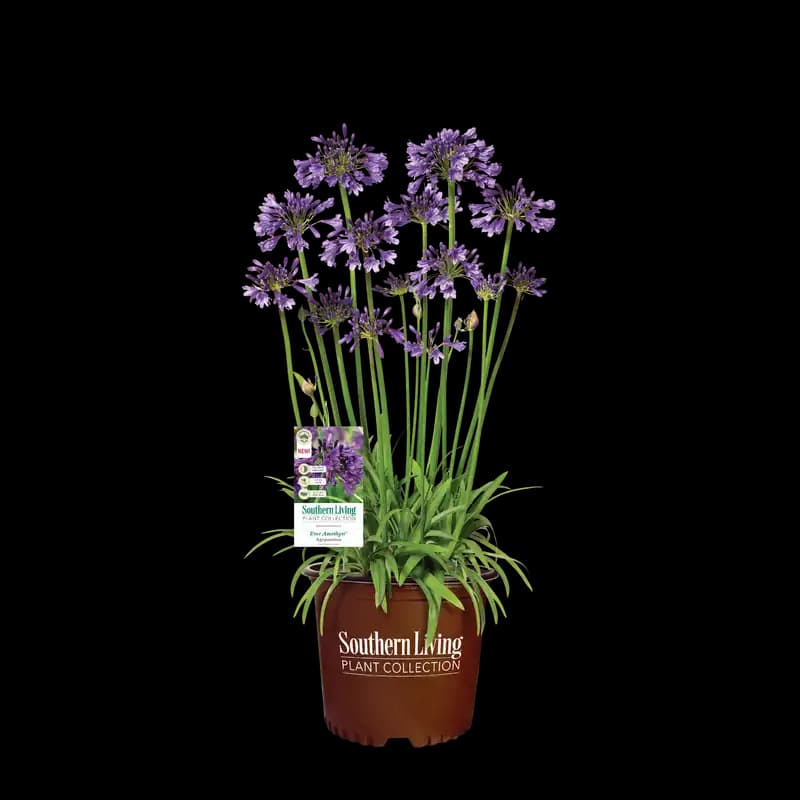
Agapanthus Ever Amethyst™
Agapanthus hybrid 'MP003' PP30163
Semi-dwarf; great for containers or cut flowers
- Plant Type
- Perennials & Annuals
- Width
- 12-18 In.
- Height
- 12-16 In.
- USDA hardiness zone
- 8 - 11
- Sun requirements
- Full Sun, Part Shade
- Plant developer
- Southern Living
- Design image count
- 3
Design images (3)


Bring your vision to life
The design images above are drag-and-drop ready — place this plant on a photo of your own yard and see it before you plant it.
Create design onlineAbout Agapanthus Ever Amethyst™
Ever Amethyst™ is the trade name for the compact Agapanthus hybrid ‘MP003’, selected for vivid purple flowers and repeat bloom. It suits sunny borders and patio containers, where compact foliage supports taller seasonal flower stems.
## Cultivar and Size
[De Wet Plant Breeders](https://conceptplants.com/varieties/agapanthus-ever-amethyst-mp003) developed ‘MP003’, sold by [Southern Living Plants](https://southernlivingplants.com/the-collection/plant/ever-amethyst-agapanthus/) as Ever Amethyst™. U.S. Plant Patent [PP30,163](https://patents.google.com/patent/USPP30163P2/en) was granted January 29, 2019. Southern Living lists mature dimensions of 24–30 inches high by 12–18 inches wide and spring-to-fall flowering. The patent distinguishes foliage height (30–40 cm) from flowering stems (50–60 cm), while the [UC Davis field trial](https://uclpit.ucdavis.edu/agapanthus_MP003) measured plant height separately from the flower stems. Site and growing conditions affect the overall display.
## Growing Conditions
Give it sun or part sun and sharply drained soil. Southern Living lists low water needs; water during establishment and active growth, then adjust to rainfall and soil. The seller lists USDA zones 8–11. Southern Living describes the foliage as evergreen, while the patent calls the cultivar semi-deciduous depending on climate. UC Davis observed yellowing older leaves through the season, so it may need more foliage cleanup than its compact habit suggests.
## Maintenance
Remove spent flower stalks near the base and trim yellowing or damaged leaves as they appear. Leave healthy foliage in place through the growing season; reduce winter exposure where local conditions fall below the listed hardiness range.