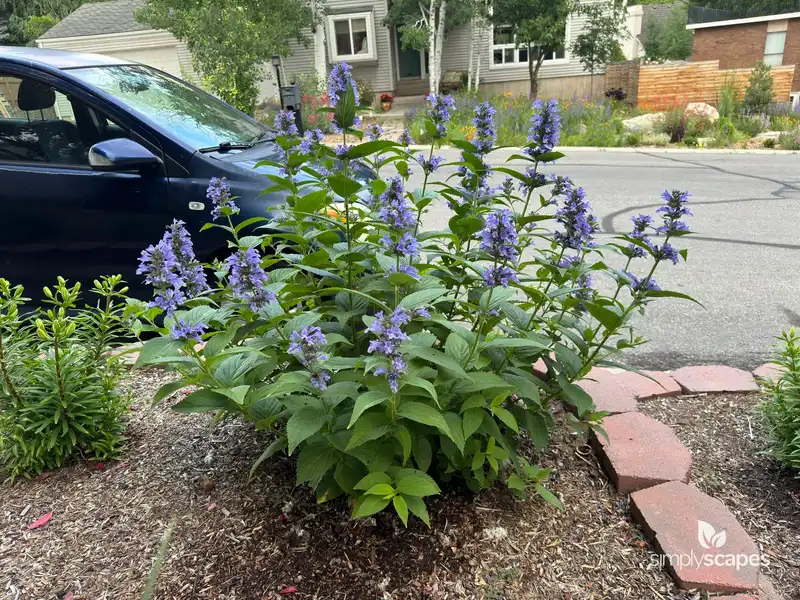
Blue giant hyssop
Agastache foeniculum
A pollinator powerhouse with licorice-scented leaves and vibrant purple spikes.
- Plant Type
- Perennials & Annuals
- Width
- 1-3 Ft.
- Height
- 2-5 Ft.
- USDA hardiness zone
- 4 - 8
- Sun requirements
- Full Sun, Part Shade
- Design image count
- 2
Design images (2)


Bring your vision to life
The design images above are drag-and-drop ready — place this plant on a photo of your own yard and see it before you plant it.
Create design onlineAbout Blue giant hyssop
Blue giant hyssop (Agastache foeniculum), also called anise hyssop, is an upright, clump-forming North American perennial with aromatic licorice-scented leaves. Its dense blue to purple flower spikes bloom from midsummer into fall and attract bees, butterflies, and other pollinators.
## Landscape use and size
Plant it in the middle or back of a sunny perennial border, meadow, native planting, or herb garden. University sources give overlapping but not identical mature sizes: Wisconsin describes roughly 2–4 feet tall and 1–3 feet wide, while North Carolina Extension lists 3–5 feet tall. Expect variation with moisture, light, and growing conditions rather than a fixed height. It may self-seed; remove unwanted seedlings while small.
## Growing conditions
Choose full sun to partial shade and well-drained soil that can range from moderately moist to dry. The [North Carolina Extension Plant Toolbox](https://plants.ces.ncsu.edu/plants/agastache-foeniculum/) reports flowering from June into late autumn and USDA zones 4a–8b. [Wisconsin Horticulture](https://hort.extension.wisc.edu/articles/anise-hyssop-agastache-foeniculum/) gives hardiness zones 3a–8b and notes that the plant is short-lived; the two references agree on well-drained sites and a long summer-to-fall flower display. The leaves and flowers are used in teas and other foods, but identify the plant correctly before harvesting.
## Maintenance
Water new plants as they establish. Deadhead faded spikes if you want to encourage additional flowering; leave some seed heads for birds or remove them to limit self-sowing. Divide clumps in spring or fall if needed.