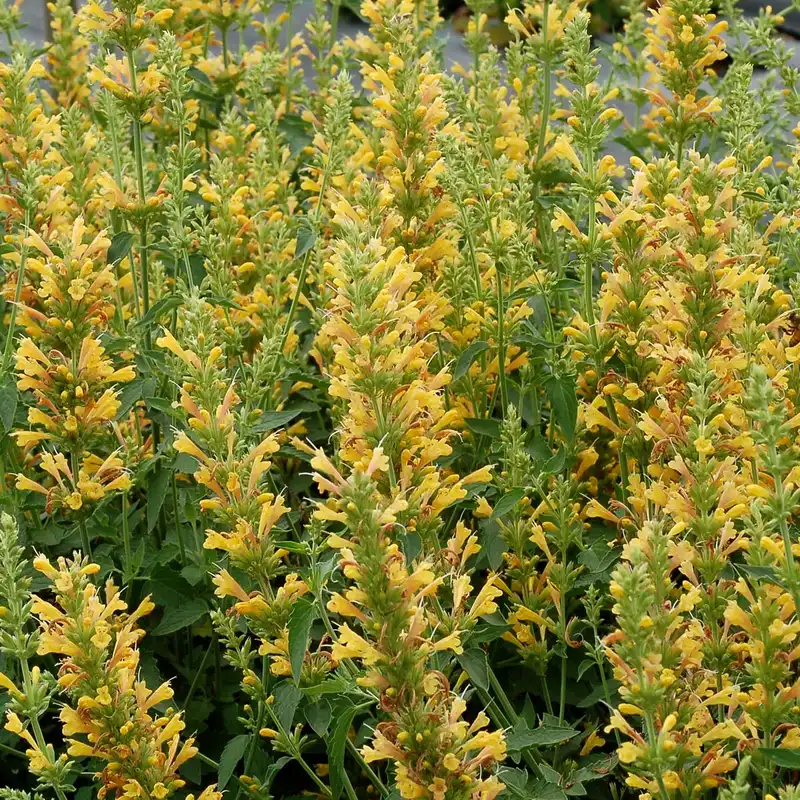
KUDOS™ Kudos Yellow Agastache
Agastache 'Kudos Yellow' PP26563 EU46413
Vibrant yellow blooms on a compact, pollinator-friendly perennial.
- Plant Type
- Perennials & Annuals
- Width
- 22 In.
- Height
- 20–27 In.
- USDA hardiness zone
- 5 - 10
- Sun requirements
- Full Sun
- Water requirements
- Average
- Plant developer
- Terra Nova
- Design image count
- 1
Design images (1)

Bring your vision to life
The design images above are drag-and-drop ready — place this plant on a photo of your own yard and see it before you plant it.
Create design onlineAbout KUDOS™ Kudos Yellow Agastache
[Terra Nova’s cultivar profile](https://www.terranovanurseries.com/product/agastache-kudos-yellow/) identifies KUDOS™ ‘Kudos Yellow’ as a compact, upright Agastache selected for dense spikes of bright yellow flowers. The blooms appear from June through September, adding a strong summer color accent to sunny borders and pollinator plantings. Its green foliage and upright branching keep the plant readable among lower edging plants and broader mounds.
## Size and placement
Terra Nova reports foliage height, spread, and flowering height of about 20, 22, and 27 inches, respectively; its [cultivar profile](https://www.terranovanurseries.com/product/agastache-kudos-yellow/) provides the measurements and site guidance. Use the flowering height when allowing clearance near paths or neighboring plants. The breeder recommends full sun and fertile, well-drained soil, with particularly sharp drainage through winter. The variety is hardy in USDA Zones 5–10 and is reported to resist downy mildew. [U.S. plant patent PP26563](https://patents.google.com/patent/USPP26563P2/en) identifies the cultivar and records a 2016-03-29 grant date. Water during establishment; the breeder describes established plants as drought tolerant and lists average garden water needs.
## Seasonal interest
The yellow flower spikes make this cultivar an easy-to-see summer focal note. Terra Nova identifies it as a hummingbird and pollinator attractor and as deer resistant. Flowering dates vary with local weather, so the June–September schedule is a guide rather than a fixed calendar.
## Maintenance
Keep soil draining freely, especially in regions with wet winters. Provide water while the plant establishes; established plants can tolerate dry spells.