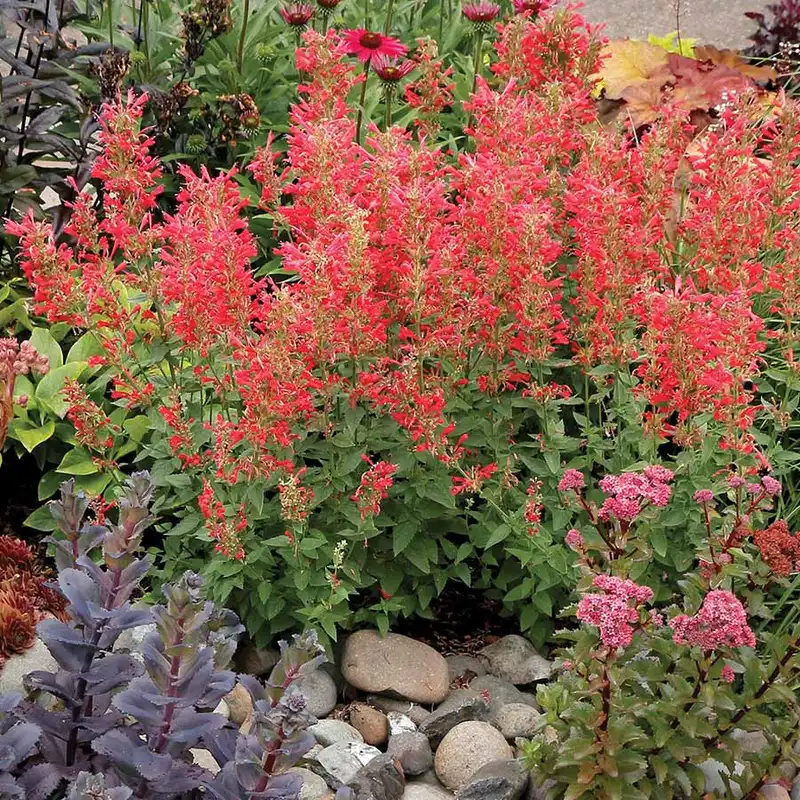
Agastache Kudos™ Red
Agastache 'Kudos Red' ('TNAGAKR') PP30375 EU54373
A compact, vibrant red hummingbird mint perfect for sunny borders and containers.
- Plant Type
- Perennials & Annuals
- Width
- 20-25 In.
- Height
- 20 In.
- USDA hardiness zone
- 5 - 10
- Sun requirements
- Full Sun
- Plant developer
- Terra Nova
- Design image count
- 1
Design images (1)
---Think-Plants.webp&w=3840&q=75)
Bring your vision to life
The design images above are drag-and-drop ready — place this plant on a photo of your own yard and see it before you plant it.
Create design onlineAbout Agastache Kudos™ Red
Agastache ‘Kudos Red’ is a compact, upright perennial with red flower spikes above aromatic green foliage. It flowers from midsummer into autumn and draws hummingbirds and butterflies, bringing a long display to sunny borders and containers.
## Size and placement
[Terra Nova’s catalog](https://terranovanurseries.com/other/catalogs/digital/2025-2026/files/basic-html/page25.html) gives about 12 inches of foliage, a 25-inch spread, and 20 inches to the flowering top; [Saunders Brothers](https://www.saundersbrothers.com/plant/Agastache-Kudos-Red) and [Perennials.com](https://www.perennials.com/plants/agastache-kudos-red.html) report roughly 12–20 inches tall and 20–24 inches wide. Allow around two feet of spread, with the final size shaped by climate and growing conditions. The breeder lists USDA Zones 5–10, while another grower reference gives Zones 6–10.
## Growing conditions
Grow it in full sun and sharply drained soil. Excellent winter drainage is important because wet soil can cause crown or root loss. Once established, the plant tolerates dry periods; water new plants through establishment. The fragrant flowers and foliage and compact mound suit a mixed border, pollinator garden, or container. Red flower spikes attract hummingbirds and butterflies, and the plant is generally deer resistant. [U.S. plant patent PP30,375](https://patents.google.com/patent/USPP30375P2/en) identifies this cultivar.
## Maintenance
Keep winter drainage open and avoid overwatering in cold, wet conditions. Remove old stems in spring as new growth begins. Deadheading is optional; leave the upright spikes through fall if you want the full seasonal display.