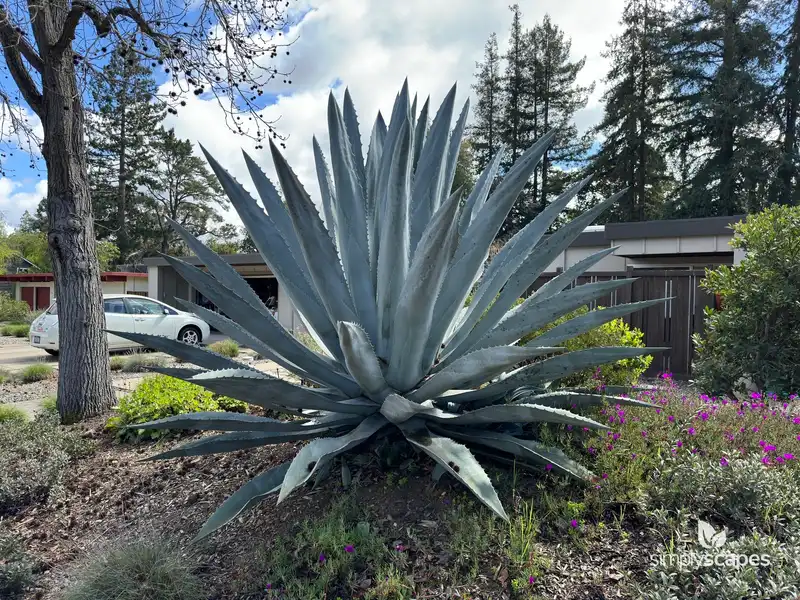
Century Plant
Agave americana
A majestic, architectural succulent for dramatic, low-maintenance xeriscapes.
- Plant Type
- Succulents
- Width
- 6-12 Ft.
- Height
- 6-10 Ft.
- USDA hardiness zone
- 8 - 11
- Sun requirements
- Full Sun, Part Shade
- Design image count
- 22
Design images (22)


Bring your vision to life
The design images above are drag-and-drop ready — place this plant on a photo of your own yard and see it before you plant it.
Create design onlineAbout Century Plant
Agave americana, the century plant or maguey, forms a bold evergreen rosette of blue-green, fleshy leaves edged with sharp teeth and tipped with a spine. It is native to Mexico and the southwestern United States, where its sculptural form suits spacious dry gardens, rock gardens, and sunny slopes.
## Form and landscape use
Allow ample clearance around the mature rosette and keep it away from paths and play areas. Published dimensions vary with climate and growing conditions: sources describe leaf rosettes roughly 6–10 feet tall and 6–12 feet wide, with some species profiles giving about 6 feet tall. A mature plant may send up a branched flowering stalk 15–30 feet tall or more, but the stalk’s height is separate from the rosette’s landscape size. The pale greenish-yellow flowers can provide nectar for insects, birds, and bats.
## Growing conditions
Plant in full sun and sandy or otherwise sharply drained soil. It tolerates dry periods after establishment and is suited to low-water landscapes, but wet soil can lead to root rot. The century plant is generally suited to USDA Zones 8–11; cold tolerance varies with site and exposure. It may take roughly 8–30 years to flower. The main rosette usually dies after flowering, while offsets at the base can continue growing.
## Maintenance
Keep sharp leaves clear of foot traffic and wear gloves when handling; sap may irritate skin. Remove spent lower leaves as needed, and avoid excess moisture around the roots. [North Carolina Extension](https://plants.ces.ncsu.edu/plants/agave-americana/), [UF/IFAS Extension](https://gardeningsolutions.ifas.ufl.edu/plants/ornamentals/century-plant/), and [Kew](https://powo.science.kew.org/taxon/urn:lsid:ipni.org:names:319063-2) support its identity, growing needs, and regional dimensions.