Desert Agave
Agave deserti
An iconic, drought-tolerant succulent with striking yellow blooms.
- Plant Type
- Succulents
- Width
- 36 In.
- Height
- 24 In.
- USDA hardiness zone
- 7 - 11
- Sun requirements
- Full Sun
- Design image count
- 5
Design images (5)


Bring your vision to life
The design images above are drag-and-drop ready — place this plant on a photo of your own yard and see it before you plant it.
Create design onlineAbout Desert Agave
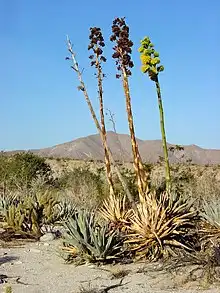
Desert agave is a slow-growing, evergreen succulent that forms gray-green rosettes and can spread into a clump as offsets develop. Its mature yellow flower stalk is a striking, infrequent event; the flowering rosette then dies, while offsets can continue the planting.
## Character and garden use
Use this compact, spiny agave as an architectural accent in a sunny gravel bed, dry garden, or spacious container. Give the sharp leaf tips room from paths and seating. The [Santa Barbara Botanic Garden](https://shop.sbbotanicgarden.org/products/agave-deserti-desert-agave) describes a clumping rosette with a slow growth rate and yellow spring-to-summer flowers.
## Size and setting
Allow about 2 ft. of foliage height and 3 ft. of spread; the flowering stalk may reach about 15 ft. The University of Arizona Campus Arboretum gives a broader 6 ft. spread estimate, so mature clumps may need more room. The plant is native to desert washes and dry slopes in the Colorado and Mojave deserts and Baja California. It grows best in full sun and sharply drained, sandy soil. Water sparingly after establishment, allowing the soil to dry between irrigation. The [University of Arizona Campus Arboretum](https://apps.cals.arizona.edu/arboretum/taxon.aspx?id=770) lists low water use and a summer flowering season.
## Maintenance
Keep water away from the crown and avoid persistently wet soil. Remove dead leaves carefully and leave room for the mature plant; protect hands and skin from sharp spines and irritating sap. After flowering, remove the spent flowering rosette if desired and retain healthy offsets.