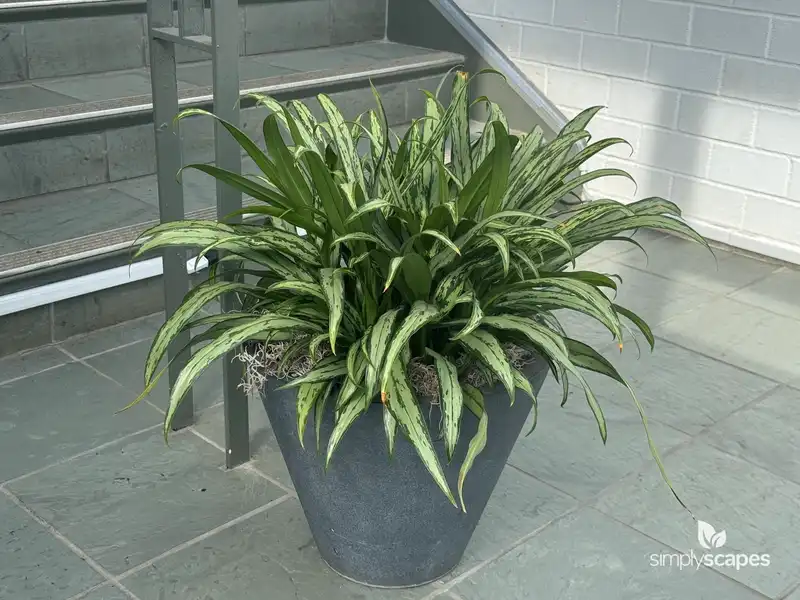
Silver Queen Aglaonema
Aglaonema nitidum 'Silver Queen'
A resilient, air-purifying houseplant with striking silver-marbled foliage.
- Plant Type
- Perennials & Annuals
- Width
- 12-24 In.
- Height
- 12-24 In.
- USDA hardiness zone
- 10 - 11
- Sun requirements
- Part Shade, Full Shade
- Water requirements
- Moderate
- Design image count
- 1
Design images (1)

Bring your vision to life
The design images above are drag-and-drop ready — place this plant on a photo of your own yard and see it before you plant it.
Create design onlineAbout Silver Queen Aglaonema
Silver Queen is a foliage houseplant with upright stems and broad, lance-shaped leaves patterned in silver-white and green. The cultivar is also listed under several botanical names, including Aglaonema nitidum 'Silver Queen'; it is grown primarily for its leaves rather than its small, infrequent flowers ([NParks](https://www.nparks.gov.sg/florafaunaweb/flora/1/6/1623), [RHS](https://www.rhs.org.uk/plants/92017/aglaonema-silver-queen/details)).
## Indoor Placement
Set it in bright indirect light to partial or full shade. Texas Tech describes 'Silver Queen' as a low-light interior foliage plant with dark green, silver-marked leaves and a spreading form, about 1–2 feet high and wide; NParks gives a similar 0.6 m height and spread ([Texas Tech](https://www.depts.ttu.edu/plantresources/Pages/directories/landscape-info-sheets/interior-info/Aglaonema-SilverQueen.php), [NParks](https://www.nparks.gov.sg/florafaunaweb/flora/1/6/1623)). Rotate the pot occasionally for even growth and keep it away from cold drafts; University of Florida notes chilling injury can occur below 55°F, especially for this cultivar.
## Water and Potting
Use a free-draining potting mix and water moderately, allowing excess water to drain. NParks lists moderate water and well-drained soil, while RHS cautions that excess moisture can lead to stem rot. Moderate growth and relatively low routine maintenance suit a shelf, desk, or larger indoor planter. Keep the plant out of reach of children and pets: RHS lists it as harmful if eaten and a possible skin or eye irritant.
## Maintenance
Wipe dust from leaves with a damp cloth and remove yellowing leaves at the stem. Water less during slower winter growth, and repot when roots fill the container. Avoid standing water and protect the foliage from temperatures below 55°F.