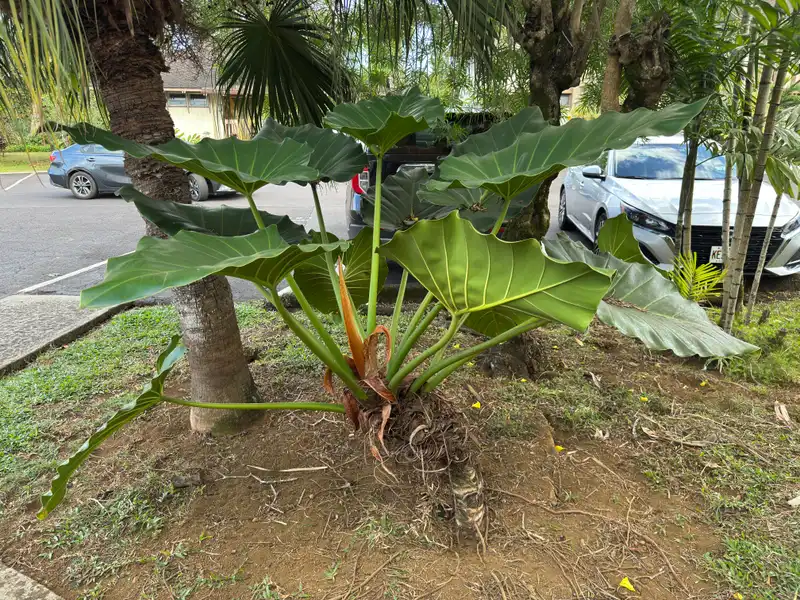
Elephant Ear
Alocasia
Dramatic tropical foliage for a bold, exotic statement.
- Plant Type
- House Plants & Tropicals
- Width
- 2-8 Ft.
- Height
- 2-10 Ft.
- USDA hardiness zone
- 8 - 11
- Sun requirements
- Part Shade, Full Shade
- Design image count
- 7
Design images (7)


Bring your vision to life
The design images above are drag-and-drop ready — place this plant on a photo of your own yard and see it before you plant it.
Create design onlineAbout Elephant Ear
Alocasia is a genus of tropical and subtropical foliage plants with large, often heart- or arrow-shaped leaves and prominent veins. Leaf colors, sizes, and shapes vary widely by species and cultivar, so select a plant suited to the available space and growing conditions ([North Carolina Extension Gardener Plant Toolbox](https://plants.ces.ncsu.edu/plants/alocasia/), [Kew Plants of the World Online](https://powo.science.kew.org/taxon/urn:lsid:ipni.org:names:1078078-2/general-information)).
## Range and form
Kew recognizes Alocasia as an accepted genus in Araceae, native from tropical and subtropical Asia to eastern Australia. The plants are rhizomatous or tuberous perennials that range from compact forms to very large species. North Carolina Extension describes leaves 12–36 inches long and notes tropical plants can reach about 10 feet. The University of Florida lists a broad genus-level size range of 2–10 feet high by 1–10 feet wide, with considerable variation by selection.
## Growing conditions
Grow Alocasia in warm conditions with filtered or indirect light and rich, moisture-retentive soil. Most are grown as houseplants or in outdoor containers and borders during warm weather. Protect outdoor-grown pots from frost; the genus includes plants that are evergreen or seasonally dormant, and individual species differ in light and water needs. The University of Florida profile gives a broad outdoor hardiness range of USDA zones 8–11; local performance depends on species and microclimate.
## Maintenance
Water consistently during active growth, allow excess water to drain, and reduce watering during winter dormancy where applicable. Watch for spider mites and avoid leaving the potting mix waterlogged. Flowers may appear in spring or summer but are often inconspicuous. Alocasia contains calcium oxalate and can be harmful if eaten; keep plants away from children and pets.