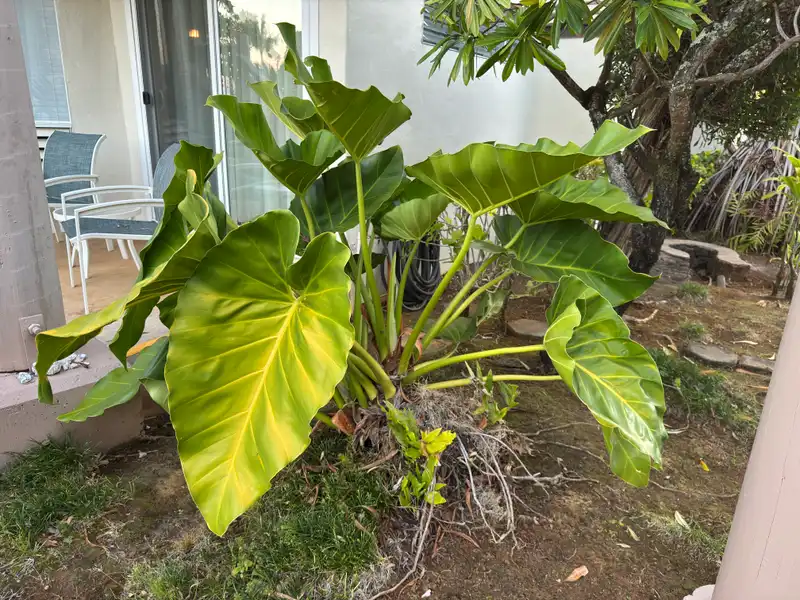
Giant Taro
Alocasia macrorrhizos
- Plant Type
- House Plants & Tropicals
- Width
- 5–8 ft
- Height
- 5–13 ft
- USDA hardiness zone
- 10 - 12
- Sun requirements
- Full Sun, Part Shade
- Water requirements
- Moderate
- Design image count
- 2
Design images (2)


Bring your vision to life
The design images above are drag-and-drop ready — place this plant on a photo of your own yard and see it before you plant it.
Create design onlineAbout Giant Taro
Alocasia macrorrhizos, or giant taro, is a tropical rhizomatous perennial grown for enormous, glossy, mid-green leaves with pale veins. It creates a strong architectural accent in warm-climate gardens and large containers, but its scale and tender growth make it unsuitable for most cold-winter landscapes.
## Form and placement
The [Royal Horticultural Society](https://www.rhs.org.uk/plants/197177/alocasia-macrorrhizos/details) gives a typical mature height and spread of 1.5–2.5 m and notes that the plant may flower with a pale green spathe in summer. In contrast, [University of Florida IFAS](https://ask.ifas.ufl.edu/publication/FP033) lists plants in Florida at about 12–15 ft tall and 6–10 ft wide. These ranges reflect the difference between growing conditions and season length; allow generous room in long, warm seasons, while a container or conservatory can keep it smaller. The leaves and petioles are easily damaged by strong wind.
## Growing conditions
Partial shade, warmth, humidity, and rich, moisture-retentive soil that drains well support healthy growth. It can be grown outdoors year-round in tropical climates or moved to a protected conservatory in cooler regions; the RHS advises reducing winter watering and keeping it above 15°C. Although giant taro has been cultivated as a food crop in the tropics, raw plant parts contain irritating calcium oxalate and are toxic if eaten; safe preparation is specialized, so treat it as ornamental. The genus can spread from roots in warm climates, and giant taro is naturalized in tropical regions; check local guidance before planting near waterways.
## Maintenance
Water regularly during active growth and keep the root zone from drying for long periods, while avoiding stagnant conditions in containers. Remove damaged leaves at the base. In cold climates, bring container plants into a warm, bright sheltered space before frost.