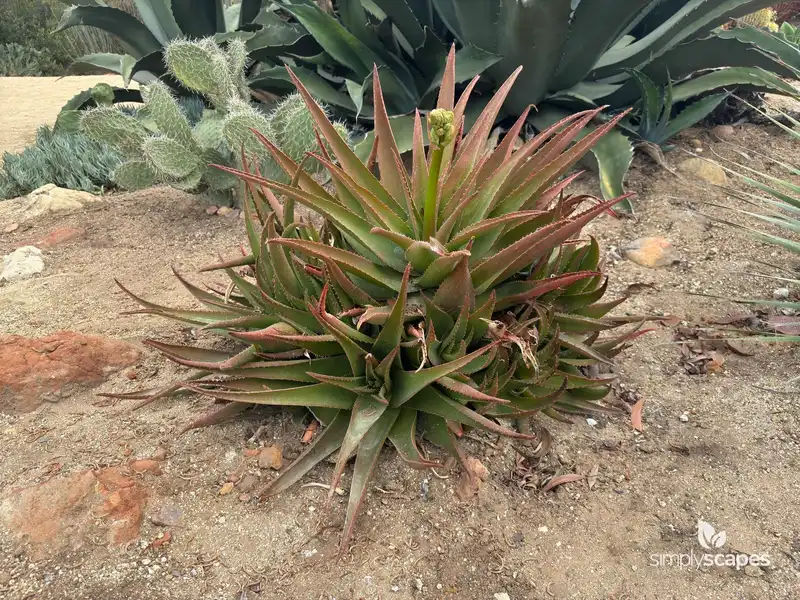
Aloe Plant
Aloe
A versatile medicinal succulent with striking architectural foliage.
- Plant Type
- Succulents
- Width
- 1-3 Ft.
- Height
- 1-2 Ft.
- USDA hardiness zone
- 10 - 12
- Sun requirements
- Full Sun, Part Shade
Bring your vision to life
The design images above are drag-and-drop ready — place this plant on a photo of your own yard and see it before you plant it.
Create design onlineAbout Aloe Plant
Aloe is a diverse genus of succulents whose species range from compact rosettes to shrubs and tree-like forms. Many cultivated types have fleshy rosette leaves and upright flower stems, while outdoor hardiness and watering needs vary by species.
## Genus overview
The [Kew genus profile](https://powo.science.kew.org/taxon/urn%3Alsid%3Aipni.org%3Anames%3A30106039-2/general-information) places Aloe in Asphodelaceae and describes species ranging from perennial herbs to shrubs and trees, with fleshy leaves arranged in rosettes and flowers carried on upright stems. The [RHS Aloe guide](https://www.rhs.org.uk/plants/aloe?type=0) notes that many cultivated aloes form compact rosettes with toothed leaves and yellow or red tubular flowers, though appearance differs among species. They are used as container and conservatory plants as well as in suitable outdoor settings.
## Growing conditions
For container-grown aloes, the RHS recommends a sharply draining cactus compost or a peat-free mix amended with grit, full light, and good ventilation. Avoid continuously wet compost, shade, high humidity, and freezing temperatures. Before planting an aloe outdoors, match the species’ frost tolerance to local winter conditions; reduce watering in winter when growth slows.
## Maintenance
Keep containers free-draining and remove damaged leaves with clean tools. Do not assume every Aloe species shares the gel, medicinal, food, or hardiness traits associated with Aloe vera.
## Queensland bushfire guidance
[Queensland's guidance](https://www.qra.qld.gov.au/sites/default/files/2020-12/0576_qra_bushfire_guideline_v10_pages_print.pdf) lists all varieties of Aloe. This broad listing does not establish that each species or cultivar was individually assessed; check the source's scope, local suitability and fire resistance.