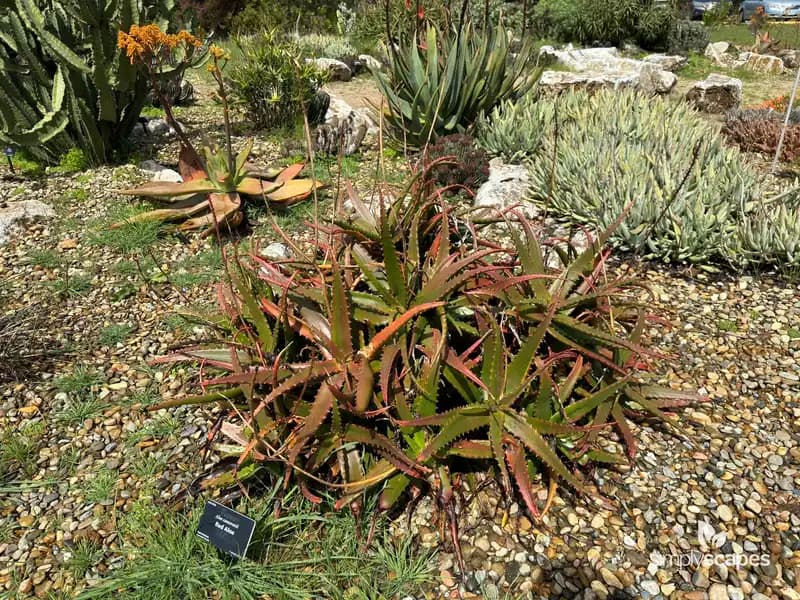
Aloe cameronii
Aloe cameronii
A striking succulent with star-shaped rosettes that turn brilliant coppery red in the sun.
- Plant Type
- Succulents
- Width
- 24-36 In.
- Height
- 24-36 In.
- USDA hardiness zone
- 11
- Sun requirements
- Full Sun
- Design image count
- 3
Design images (3)


Bring your vision to life
The design images above are drag-and-drop ready — place this plant on a photo of your own yard and see it before you plant it.
Create design onlineAbout Aloe cameronii
Aloe cameronii, often called red aloe, is a branching succulent with open rosettes whose green leaves can turn coppery red in hot sun or dry conditions. Orange-red flower spires add a second seasonal accent, making it useful in a warm, sharply drained border or container.
## Foliage and flowers
The species forms an upright, spreading subshrub with numerous branches; Kew’s Flora Zambesiaca account describes plants usually to about 1.5 m tall, occasionally taller when supported. Leaves stay green in favorable conditions but become bright copper-red during dry periods. The [Royal Horticultural Society profile](https://www.rhs.org.uk/plants/932/aloe-cameronii/details) reports red foliage in hot sunshine or drought, a return toward green when temperatures fall or water is available, and orange flowers in autumn. Kew records red flowers, sometimes orange or creamy yellow, and notes that leaf color varies.
## Siting
Choose full sun for stronger red color, while allowing a gradual transition into intense exposure. Use a gritty, well-drained medium and a container or bed with excellent drainage; do not leave the roots in wet compost. Its drought-associated color is a response to conditions, not a reason to withhold water from a newly planted specimen. The species suits frost-free or mild-winter gardens; protect it from freezing weather and prolonged cold, wet soil.
## Maintenance
Water during active growth, then allow the growing medium to dry before watering again. Reduce watering in cool weather. Remove dead leaves and spent flower stalks as needed, and divide or replant offsets when they crowd the container or bed.