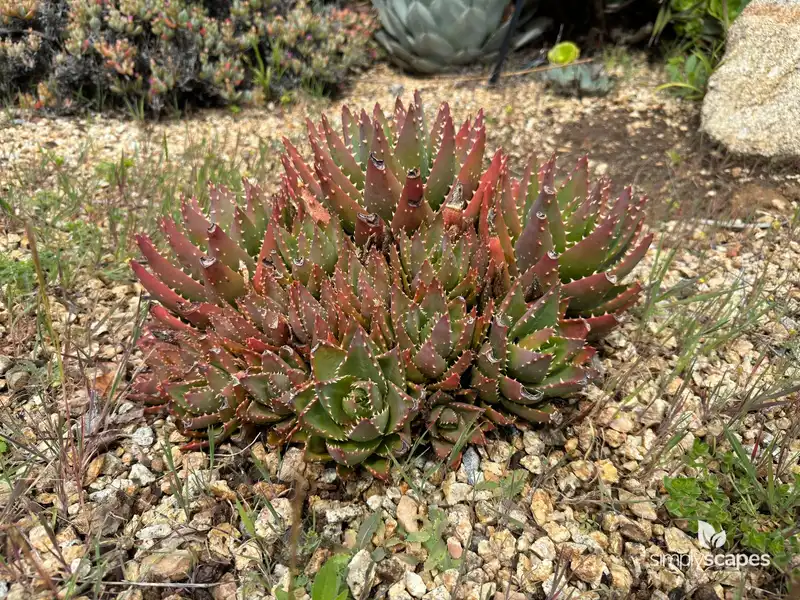
Mitre Aloe
Aloe perfoliata
A hardy, sprawling succulent with toothy rosettes and vibrant orange blooms.
- Plant Type
- Succulents
- Width
- 3-5 Ft.
- Height
- 3-5 Ft.
- USDA hardiness zone
- 9 - 11
- Sun requirements
- Full Sun, Part Shade
- Design image count
- 6
Design images (6)


Bring your vision to life
The design images above are drag-and-drop ready — place this plant on a photo of your own yard and see it before you plant it.
Create design onlineAbout Mitre Aloe
Mitre aloe is a South African succulent with bluish-green rosettes carried on long, creeping stems. A mature clump spreads across rocky ground or hangs over a wall, and its upright flower stalks bear dense red blooms; the native-range season is summer, though flowering can shift with climate and cultivation.
## Form and season
The thick leaves curve inward during dry periods and have small teeth along their edges. Plants grow in groups, with creeping stems reported to reach about 2 m; this is a sprawling groundcover habit rather than a 2 m upright shrub. Full sun tends to keep the foliage bluer and produces the best flowering, while shade leaves may be greener and more loosely arranged. Nectar-bearing flowers are visited by sugarbirds and small insects.
## Landscape placement
Plant it in a raised rock garden, deep container, retaining wall, or dry slope where the stems can trail without obstructing a path. It prefers sharply drained, sandy soil, and its mountain habitat experiences seasonal rain and occasional snow. Once established it can endure extended dry periods, but water sparingly and avoid waterlogged roots. [SANBI PlantZAfrica](https://plantzafrica.com/plantab/aloeperfol.html) documents its creeping stems, summer flowers, habitat, and landscape uses; the [RHS profile](https://www.rhs.org.uk/plants/186424/aloe-perfoliata/details) lists Aloe mitriformis as a synonym and describes red winter flowers in RHS conditions.
## Maintenance
Give the plant room to spread; trim only stems that have outgrown their setting, and root healthy cuttings after allowing cut ends to dry. Check mature plants for scale insects or aphids.