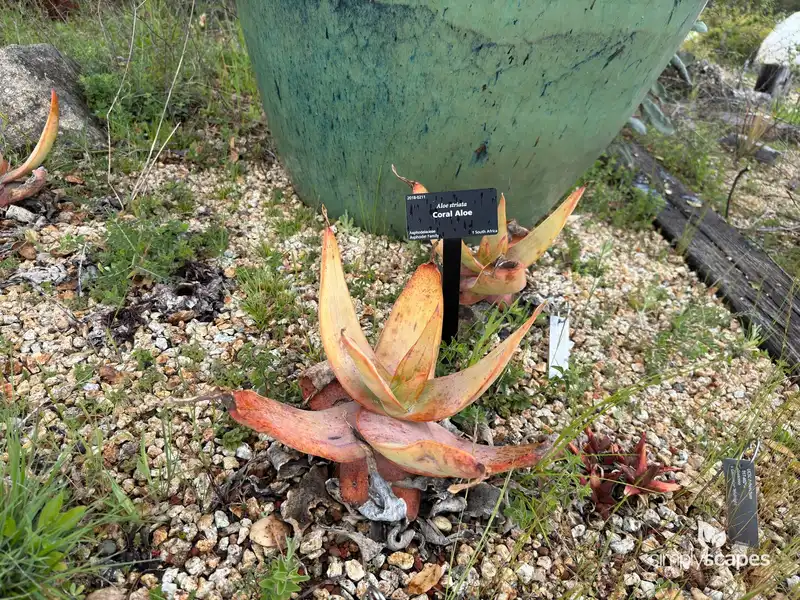
Coral Aloe
Aloe striata
A stunning stemless succulent with coral blooms and smooth, striped leaves.
- Plant Type
- Succulents
- Width
- 1.6-3.3 Ft.
- Height
- 1.6-3.3 Ft.
- USDA hardiness zone
- 9 - 11
- Sun requirements
- Full Sun, Part Shade
- Design image count
- 2
Design images (2)


Bring your vision to life
The design images above are drag-and-drop ready — place this plant on a photo of your own yard and see it before you plant it.
Create design onlineAbout Coral Aloe
Coral aloe (Aloe striata) is a stemless, evergreen succulent with broad blue-green leaves and smooth pink margins. The Royal Horticultural Society describes coral-red flower panicles in spring under its growing conditions; it also records drought resistance and a basal rosette. [RHS](https://www.rhs.org.uk/plants/975/aloe-striata/details) provides the species profile, while [Kew Plants of the World Online](https://powo.science.kew.org/taxon/urn:lsid:ipni.org:names:529928-1) confirms the accepted name and family.
## Form and placement
RHS gives a cultivated height and spread of about 0.5–1 m, recommends full sun and well-drained loam, and lists patio and container planting. Its bloom description is spring in the RHS context, so local flowering can differ with climate and growing conditions. The profile marks the plant drought resistant; keep drainage reliable and water newly planted specimens while they establish.
## Maintenance
Grow in full light and a freely draining loam or suitable container compost. Water moderately while actively growing and reduce watering during winter dormancy, following the RHS cultivation guidance. Check plants periodically for scale insects or mealybugs noted by RHS.
## Cape Town veldfire guidance
[Cape Town’s veldfire planning guidelines](https://resource.capetown.gov.za/documentcentre/Documents/Procedures%2C%20guidelines%20and%20regulations/Ukuvuka%20Veldfire%20Related%20Planning%20Guidelines%202004-04-29.pdf) list this plant’s genus among potential low-level barriers. The source does not identify this species individually; verify local suitability and follow its placement and maintenance guidance. Remove persistent dead aloe leaves as the source directs; mature size varies and should suit the low-level placement.
## Cape Town — 2004 barrier table scope and maintenance
The [Cape Town veldfire planning guidelines](https://resource.capetown.gov.za/documentcentre/Documents/Procedures%2C%20guidelines%20and%20regulations/Ukuvuka%20Veldfire%20Related%20Planning%20Guidelines%202004-04-29.pdf), Annexure 1, section 3.3, include the following source entry or entries: Table 4 (Groundcovers): “Aloe spp.” / Aloes (but remove persistant dead leaves). A species or named hybrid is a qualified representative of the printed genus group, not an individual assessment or a designation of every member. The city's PDF timed out during this audit; these table cells and adjacent conditions were checked in the [indexed copy of the same April 2004 document](https://www.scribd.com/document/790764685/Ukuvuka-Veldfire-Related-Planning-Guidelines-2004-04-29). This records that historical source's guidance; check current local requirements and suitability before use.
General source conditions: use broad-leaved, moisture-rich plants as potential screens at the fireward property edge; maintain an easy-to-walk-through garden and leaf litter no more than 15 mm deep. Avoid flammable plants under decks, against walls/wooden pillars or in hanging baskets. Remove accumulated garden refuse and dead material. No source listing guarantees survival or prevents all burning.
Groundcover barriers are intended to remain low and reduce the passage of flames through the garden. Succulent leaf moisture helps, but persistent dead aloe leaves must be removed. Remove dry seasonal stems, especially on annual species; keep adjacent lawn short and avoid a continuous grass route from the boundary to the house. The broad “other prostrate ground covers” row remains unassigned and does not designate all groundcovers.