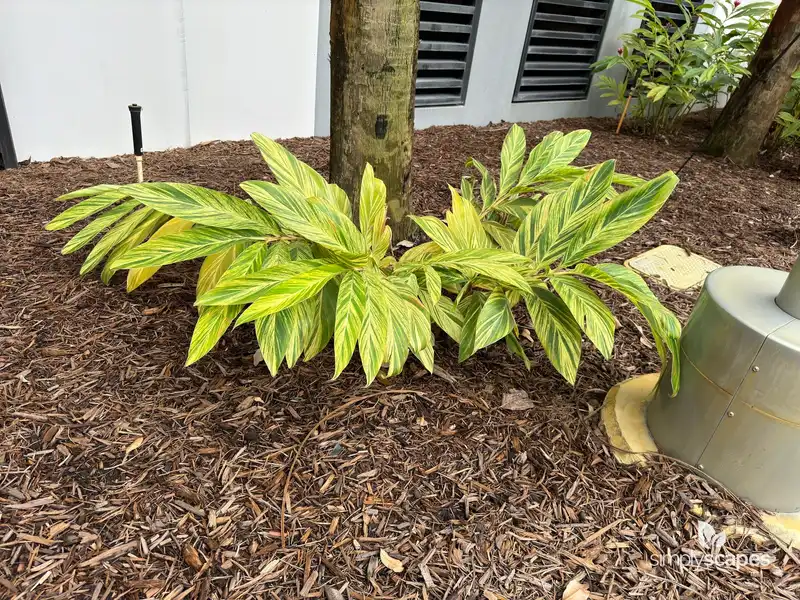
Shell Ginger
Alpinia zerumbet
A lush tropical perennial with stunning shell-like flowers and fragrant foliage.
- Plant Type
- Annuals
- Width
- 12-24 In.
- Height
- 4-10 ft.
- USDA hardiness zone
- 9 - 11
- Sun requirements
- Full Sun, Part Shade
- Design image count
- 6
Design images (6)


Bring your vision to life
The design images above are drag-and-drop ready — place this plant on a photo of your own yard and see it before you plant it.
Create design onlineAbout Shell Ginger
Shell ginger is a bold, rhizomatous perennial with broad, lush leaves and hanging clusters of shell-shaped flowers. The species varies substantially in size: green forms can reach about 10 feet, while variegated selections are shorter, so confirm the form before allowing for mature height.
## Landscape Use and Appearance
Use shell ginger as a tropical-looking backdrop, specimen, or large container plant where its upright leafy stems have room to spread. The pendulous flowers have pale pink and white outer surfaces; flowering is most likely on older stems after a mild winter. Cold can damage the foliage or stems, with regrowth from the rhizomes in suitable climates.
## Siting and Water
Grow in part shade for lush foliage, though it can tolerate sun in appropriate climates. It grows in fertile, moist, well-drained soil and benefits from irrigation during extended drought; established plants have some drought tolerance. The plant spreads from rhizomes, so allow room for a clump or contain it where spread must be limited. It is suited to warm gardens and protected seasonal containers rather than exposed cold sites. [University of North Florida Botanical Garden](https://www.unf.edu/botanical-garden/plants/alpinia-zerumbet.html) describes the green and variegated forms and their differing sizes; [UF/IFAS](https://ask.ifas.ufl.edu/publication/FP036) gives culture guidance for the named variegated selection, and [Botanic Gardens of South Australia](https://plantselector.botanicgardens.sa.gov.au/Plants/Details/2717) records species-level flowering, size, and siting data.
## Maintenance
Water through dry periods, especially in sunny sites, and remove cold-damaged stems after winter once new growth shows what has survived. Divide rhizomes during active growth if a clump needs reducing or renewal.