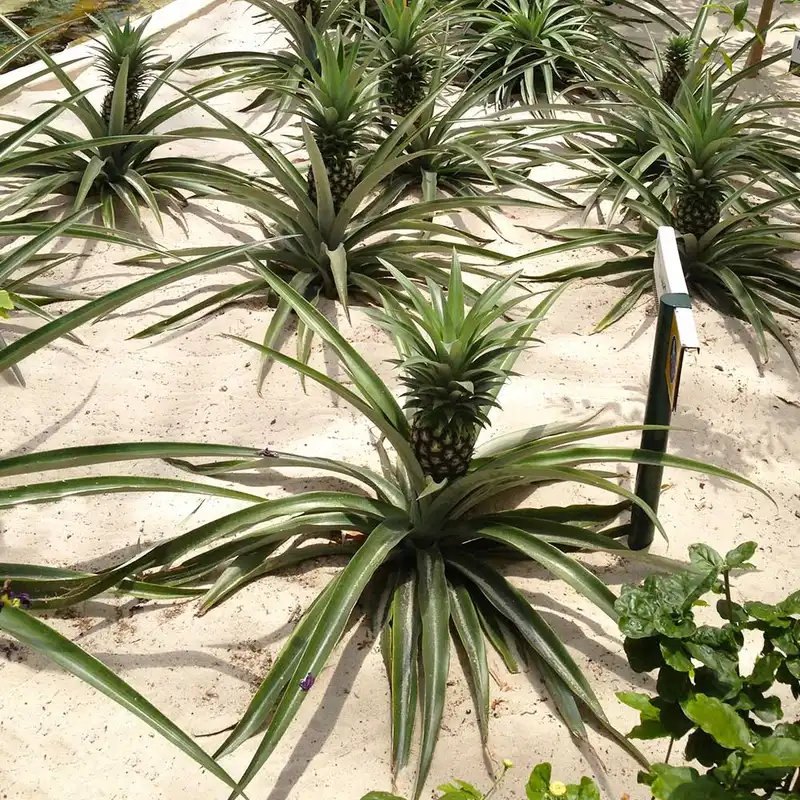
Elite Gold Pineapple
Ananas comosus 'Elite'
A sweet, golden tropical delight perfect for patio containers and indoor sun.
- Plant Type
- Edible Plants
- Width
- 3-4 Ft.
- Height
- 12-36 In.
- USDA hardiness zone
- 9 - 11
- Sun requirements
- Full Sun, Part Shade
- Design image count
- 1
Design images (1)

Bring your vision to life
The design images above are drag-and-drop ready — place this plant on a photo of your own yard and see it before you plant it.
Create design onlineAbout Elite Gold Pineapple
The Elite Gold pineapple is a fruiting bromeliad with a compact rosette of stiff, green leaves and sweet, golden-fleshed fruit. It can be grown outdoors in warm climates or kept as a container plant that moves indoors before cold weather; sharp leaf margins call for a site away from busy paths.
## Form and fruit
The professional [AgriStarts listing](https://www.agristarts.com/index.cfm/fuseaction/plants.plantDetail/plant_ID/223/index.htm) identifies *Ananas comosus* ‘Elite Gold’ and describes bright gold flesh and skin, a 1–3 ft height, and spring-to-summer fruiting. [Trees.com](https://trees.com/elite-gold-pineapple) identifies the botanical cultivar as *Ananas comosus* ‘Elite’ while marketing it as Elite Gold. Fruit quality and timing vary by growing conditions and plant maturity.
## Siting
Give it full sun to partial sun, a warm position, and a sharply draining mix. AgriStarts lists the selection for container and patio use, in USDA Zones 9–11, and as heat tolerant and low maintenance. A pot allows growers in colder regions to shelter it indoors; the [UF/IFAS pineapple guide](https://ask.ifas.ufl.edu/publication/FP039) recommends full sun and well-drained soil for productive growth, while [NC State Extension](https://plants.ces.ncsu.edu/plants/ananas-comosus/) notes that pineapples are not frost tolerant. The species is in the bromeliad family and produces purple flowers on a central spike before fruit develops.
## Maintenance
Keep the mix moist but well drained, and never leave roots soggy. Protect the plant from frost and prolonged cold. After harvest, the original rosette gradually declines but produces pups; retain a healthy pup to grow the next plant and remove others only if space is limited.