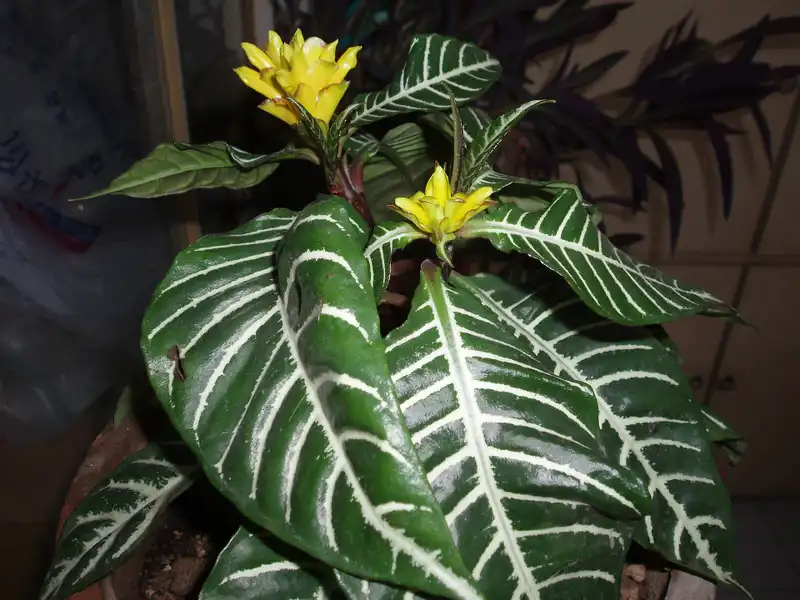
Zebra Plant Plant
Aphelandra squarrosa
A striking tropical houseplant with bold zebra-striped leaves and vibrant yellow flower spikes.
- Plant Type
- House Plants & Tropicals
- Width
- 4-5 Ft.
- Height
- 4-6 Ft.
- USDA hardiness zone
- 11 - 12
- Sun requirements
- Part Shade, Full Shade
- Design image count
- 1
Design images (1)

Bring your vision to life
The design images above are drag-and-drop ready — place this plant on a photo of your own yard and see it before you plant it.
Create design onlineAbout Zebra Plant Plant
Aphelandra squarrosa, the zebra plant or saffron spike, is a tender evergreen shrub commonly grown indoors for glossy dark green leaves marked by contrasting pale veins. Mature plants can reach roughly 1–1.5 m in height and spread in favorable conditions, while indoor size varies with container, pruning, and growing conditions.
## Foliage and flowers
The bold leaf pattern provides the main display through the year. Established plants may produce terminal spikes with yellow flowers and yellow bracts often tinted maroon; flowering is variable indoors. “Zebra plant” is also used for unrelated species, so the botanical name helps distinguish this Aphelandra from other plants sold under that common name.
## Light, warmth, and water
Grow in bright, indirect light, warmth, and high humidity. NC State Extension advises keeping the potting mix moist and not allowing it to dry completely; the RHS recommends a well-drained, moisture-retentive mix and reduced watering during winter. Avoid cold drafts, harsh direct sun, and waterlogged roots. Outside tropical climates it is best treated as a protected houseplant or conservatory specimen rather than a garden perennial.
### Sources
[RHS plant profile](https://www.rhs.org.uk/plants/26768/aphelandra-squarrosa/details) · [NC State Extension profile](https://plants.ces.ncsu.edu/plants/aphelandra-squarrosa/common-name/zebra-plant/)
## Maintenance
After flowering, trim stems back to a strong pair of leaves to encourage branching. Watch for aphids, scale, mealybugs, and spider mites. Keep humidity steady and adjust watering seasonally, maintaining some moisture even during slower winter growth.