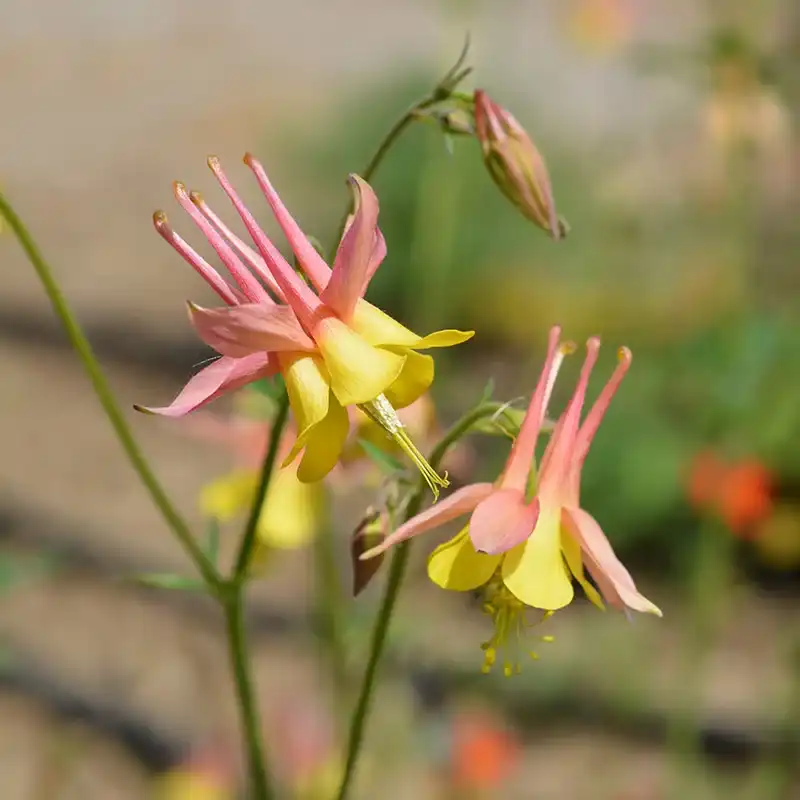
Oil Shale Columbine
Aquilegia barnebyi
A long-lived columbine native to northeastern Utah and western Colorado, with blue-green foliage and flowers in variable yellow, peach, and fuchsia combinations.
- Plant Type
- Perennials & Annuals
- Width
- 30 In.
- Height
- 24-36 In.
- USDA hardiness zone
- 7 - 8
- Sun requirements
- Part Shade, Full Shade
- Design image count
- 2
Design images (2)


Bring your vision to life
The design images above are drag-and-drop ready — place this plant on a photo of your own yard and see it before you plant it.
Create design onlineAbout Oil Shale Columbine
Oil shale columbine (*Aquilegia barnebyi*) is a long-lived western native from northeastern Utah and western Colorado, with bluish-green foliage and nodding flowers in varied yellow, peach, fuchsia, and bicolor forms. Before flowering it forms an 8–12 inch foliage mound; in bloom, its panicles lift the plant to 24–36 inches tall and it becomes almost as wide.
## Landscape and seasonal display
The [University of Idaho and Utah State University Western Native Plants guide](https://cwelwnp.usu.edu/westernnativeplants/plantlist_view.php?id=68&name=aquilegiabarnebyi) describes the plant’s changing form: a low, rounded mound before flowering, then open panicles during bloom. Flowers appear from May through July, with a period of up to eight weeks in late spring into summer and occasional rebloom later. Use it in a naturalistic border, dry shade, rock garden, or open sunny bed.
## Growing conditions
Oil shale columbine grows in full sun or light to moderate shade. It tolerates varied soils, including loams and clays, but needs good drainage. The guide notes that plants handle moderately dry conditions, while dry climates may require occasional supplemental irrigation during hot summer months. Water during establishment and watch the foliage for drought stress.
## Propagation and upkeep
Plants emerge from fleshy crowns and may take a year after transplanting or sowing to flower. Fresh seed benefits from six to eight weeks of cold stratification; crown division or basal cuttings can also propagate plants. Remove spent flower stems to improve appearance and encourage additional bloom, or leave some seedheads where volunteer seedlings are welcome.
## Maintenance
Maintain drainage around the crown and water during establishment or prolonged summer heat. If foliage becomes damaged late in the season, cut it back to encourage a fresh mound of leaves.