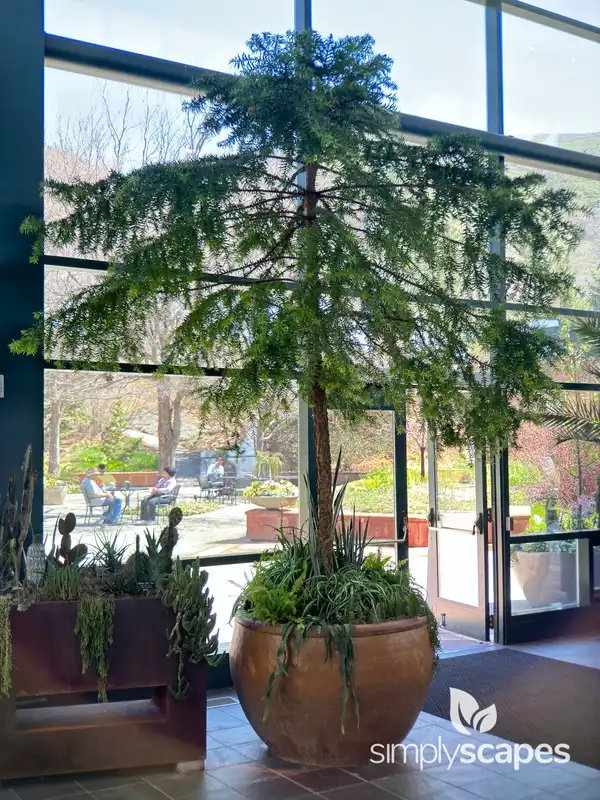
Paraná pine
Araucaria angustifolia
A majestic, prehistoric conifer with a unique candelabra shape.
- Plant Type
- Conifer Trees
- Width
- 20-25 Ft.
- Height
- 80-130 Ft.
- USDA hardiness zone
- 9 - 11
- Sun requirements
- Full Sun, Part Shade
- Water requirements
- Medium
Bring your vision to life
The design images above are drag-and-drop ready — place this plant on a photo of your own yard and see it before you plant it.
Create design onlineAbout Paraná pine
Paraná pine is a large evergreen conifer native to subtropical forests of southern Brazil, Paraguay, and northeastern Argentina. Its stiff, dark green to glaucous leaves clothe horizontal branches arranged in whorls; lower branches die away with age, leaving a distinctive flat-topped crown. Mature trees commonly reach about 35–40 m in source accounts, and female cones bear edible seeds ([Trees and Shrubs Online](https://www.treesandshrubsonline.org/articles/araucaria/araucaria-angustifolia/), [Kew Science](https://powo.science.kew.org/taxon/urn:lsid:ipni.org:names:17518-2/general-information)).
## Form and Landscape Use
This is a long-lived specimen tree for large landscapes with suitable climate and ample overhead and root space. It is botanically distinct from the related Monkey Puzzle Tree, Araucaria araucana; the two may look similar when young, but Paraná pine has softer, more loosely arranged foliage. Its striking architectural silhouette suits arboreta and spacious parks better than small residential yards.
## Growing Conditions
In its native range it grows in mixed subtropical forest, often on acidic soils. Trees and Shrubs Online reports USDA zones 8–9 and describes established plantings in mild maritime gardens; local performance depends on winter cold, summer heat, and moisture. Provide full sun to light shade and well-drained soil; keep young trees watered while roots establish. Do not treat the species’ native forest habitat as evidence of tolerance for waterlogged ground.
## Maintenance
Give the tree room to develop its mature crown and avoid unnecessary pruning. Remove only damaged or hazardous branches with appropriate arboricultural care. Seed production requires mature female trees and nearby pollen-bearing trees; fallen large cones and seeds may need clearing from pedestrian areas. The species is Critically Endangered in the wild, so choose responsibly propagated nursery stock.