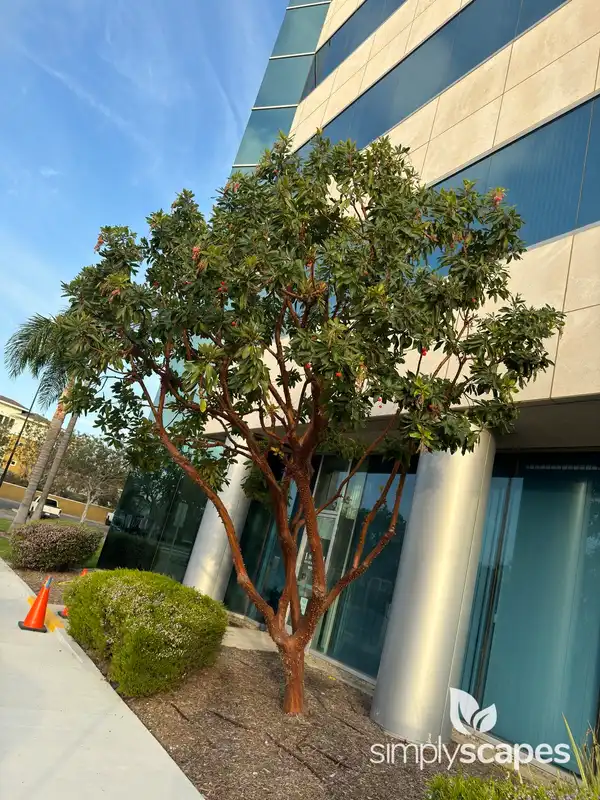
Killarney Strawberry Tree
Arbutus unedo
A stunning evergreen with peeling bark, bell-shaped flowers, and edible red berries.
- Plant Type
- Flowering Trees
- Width
- 8-10 Ft.
- Height
- 15-35 Ft.
- USDA hardiness zone
- 7 - 10
- Sun requirements
- Full Sun, Part Shade
- Design image count
- 3
Design images (3)


Bring your vision to life
The design images above are drag-and-drop ready — place this plant on a photo of your own yard and see it before you plant it.
Create design onlineAbout Killarney Strawberry Tree
Arbutus unedo is an evergreen shrub or small tree valued for glossy foliage, peeling bark, white urn-shaped flowers and red, strawberry-like fruit. Flowers and ripe fruit can overlap because fruit takes about a year to mature, giving established trees interest into autumn and sometimes winter.
## Form and growing conditions
[North Carolina Extension](https://plants.ces.ncsu.edu/plants/arbutus-unedo/) reports that plants commonly reach about 15 feet, with larger trees to 35 feet, and grow slowly. The [South Australian Plant Selector](https://plantselector.botanicgardens.sa.gov.au/Plants/Details/3700) lists 5–6 m by 2.5–3 m in its regional conditions, illustrating variation with site and climate. Grow in full sun to partial shade and well-drained soil. Water through establishment; established plants tolerate drought and salt, though supplemental irrigation depends on local rainfall.
## Flowers and fruit
Fall flowers are usually white, sometimes pale pink; warm climates may extend bloom into winter. Red fruit is described as edible and used for preserves by NC State, but the RHS cautions against eating it and other references describe it as unpalatable. Treat fruit as ornamental unless local expert guidance confirms safe use. Fruit production varies and soft fruit bruises easily. South Australian guidance warns of potential spread near conservation areas and coastal reserves; check local advice in sensitive habitats.
## Maintenance
Prune lightly to shape if needed. Allow room below the canopy for fruit and leaf litter, or keep it away from paving and frequently used entrances.