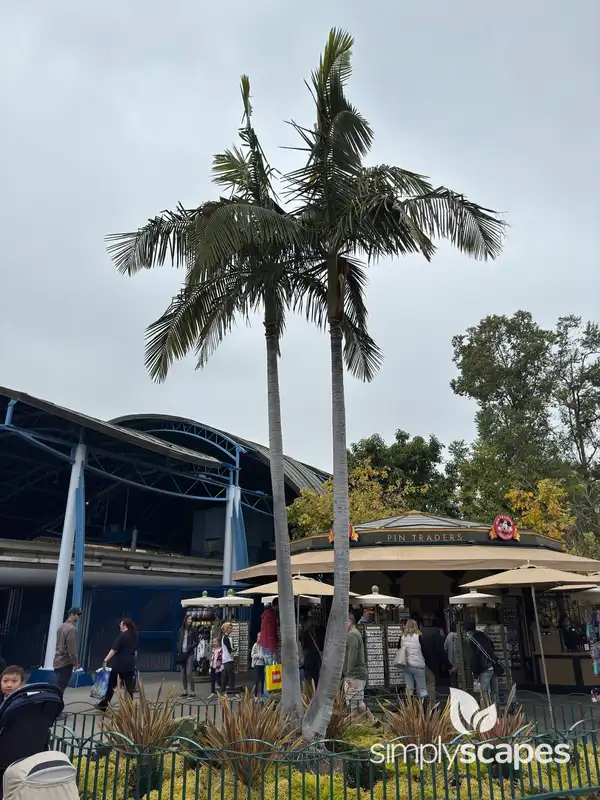
King Palm
Archontophoenix alexandrae 'Beatrice'
Tall evergreen palm with arching feather-like fronds, green crownshaft and pale undersides; ‘Beatrice’ is a nursery-trade form name.
- Plant Type
- House Plants & Tropicals
- Width
- 12-20 Ft.
- Height
- 30-40 Ft.
- USDA hardiness zone
- 10 - 11
- Sun requirements
- Full Sun, Part Shade
- Water requirements
- Moderate
- Design image count
- 1
Design images (1)

Bring your vision to life
The design images above are drag-and-drop ready — place this plant on a photo of your own yard and see it before you plant it.
Create design onlineAbout King Palm
King Palm (*Archontophoenix alexandrae*) is an evergreen, single-trunked palm with a smooth green crownshaft and long, arching feather-like leaves. The nursery-trade form called ‘Beatrice’ is described with a swollen trunk base and stepped leaf-scar rings, while Kew lists *Archontophoenix beatriceae* among the synonyms of *Archontophoenix alexandrae* ([Jungle Music](https://www.junglemusic.com/2024/12/archontophoenix-alexandrae-var-beatricea-3/), [Kew Science](https://powo.science.kew.org/taxon/urn:lsid:ipni.org:names:664083-1)).
## Form and siting
The [RHS profile for A. alexandrae](https://www.rhs.org.uk/plants/1476/archontophoenix-alexandrae/details) describes a tall, fast-growing palm with a slender, sometimes swollen trunk, fronds up to 4 m and gray or silver leaf undersides. It lists a species height above 12 m and spread of 4–8 m, partial shade, and moist but well-drained soil. These are species-level values, not measurements for a separately trialed ‘Beatrice’ clone. The name appears in nursery trade, while botanical references treat the related Beatricea name as uncertain; no patent or verified breeding history was located.
## Growing conditions
Choose a warm, sheltered site in partial shade, especially where afternoon sun could scorch leaves. Keep soil fertile, moist and well drained. Growth and cold response depend on climate; RHS’s H1B rating indicates frost sensitivity in UK conditions and is not converted to a USDA zone.
## Maintenance
Water regularly while establishing and during dry periods, then adjust to rainfall and drainage. Remove only dead leaves, cutting close to the base without damaging the crownshaft. Leave room for the mature crown and avoid moving an established palm because root disturbance can hinder transplanting.