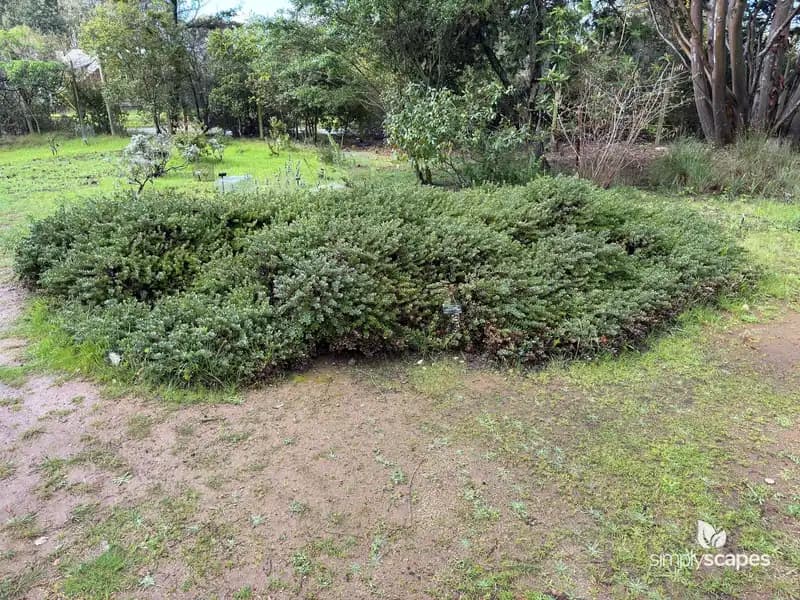
Manzanita Bush
Arctostaphylos manzanita
A dramatic evergreen shrub with striking mahogany bark and winter blooms.
- Plant Type
- Shrubs & Roses
- Width
- 10-12 Ft.
- Height
- 10-12 Ft.
- USDA hardiness zone
- 8 - 10
- Sun requirements
- Full Sun, Part Shade
- Design image count
- 1
Design images (1)

Bring your vision to life
The design images above are drag-and-drop ready — place this plant on a photo of your own yard and see it before you plant it.
Create design onlineAbout Manzanita Bush
Common manzanita is an evergreen California shrub or small tree with smooth mahogany bark, glossy leaves, urn-shaped pale flowers, and apple-like drupes. Its mature size and appearance vary across several recognized subspecies, so site the plant for its eventual woody form and verify local provenance where native planting matters.
## Form and seasons
The [USDA NRCS plant guide](https://plants.usda.gov/DocumentLibrary/plantguide/pdf/pg_arma.pdf) describes *Arctostaphylos manzanita* as an erect, spreading shrub that can reach 6–25 feet tall. Smooth mahogany stems contrast with evergreen leaves that range from bright green to grayish or bluish green. White to pink flowers bloom mainly from January through March, followed by rounded fruits that ripen from summer into early fall. The species contains multiple subspecies with localized ranges and different flowering windows.
## Siting
Choose an open, sunny position with well-drained soil. The species occurs on dry rocky slopes and tolerates poor, xeric soils; the guide also records sand, clay, and occasional serpentine soils. It can form dense thickets in suitable habitat. The live size estimate is within the documented species height range; the source gives no comparable single width range, so the existing size values remain unchanged.
## Maintenance
Water new plants during establishment, then reduce irrigation to suit the local climate and drainage. Avoid prolonged wet soil. Leave room for the mature spreading crown and keep dense growth away from paths and structures; routine shaping is generally unnecessary for a natural form.