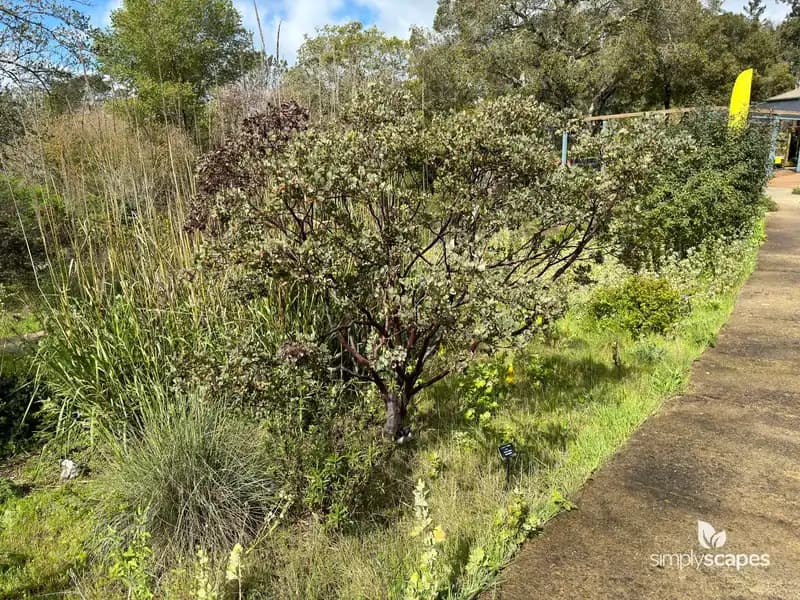
Pointleaf Manzanita
Arctostaphylos pungens
A resilient evergreen shrub with striking red bark and delicate urn-shaped flowers.
- Plant Type
- Perennials & Annuals
- Height
- 3-10 Ft.
- USDA hardiness zone
- 9 - 11
- Sun requirements
- Full Sun, Part Shade
- Design image count
- 1
Design images (1)

Bring your vision to life
The design images above are drag-and-drop ready — place this plant on a photo of your own yard and see it before you plant it.
Create design onlineAbout Pointleaf Manzanita
Pointleaf manzanita is an erect, rounded evergreen shrub with smooth reddish bark, leathery pointed leaves, and small urn-shaped flowers. It is native to dry mountain slopes and chaparral of the southwestern United States and northern Mexico, where its flowering and fruiting calendar shifts with elevation and seasonal rainfall.
## Form and flowering
The [USDA Forest Service species review](https://research.fs.usda.gov/feis/species-reviews/arcpun) gives a typical height of 3–10 feet and notes that plants over 30 years old may exceed 20 feet in diameter where fire has been excluded. Flowers may appear from January through July, with fruits from April through September. The current height value and label are far below the documented species range; no single representative height or ordinary width can be selected from the broad evidence, so numeric dimensions are left unset and the supported height range is retained as a label.
## Siting
Use a sunny, sharply drained location suited to a regional native shrub. Pointleaf manzanita occurs on dry, rocky slopes and mesas in coarse, generally acidic soils. Its distribution spans different elevations and precipitation patterns, so local climate and provenance matter; the Forest Service review does not provide a USDA hardiness-zone rating.
## Maintenance
Give young plants water through establishment, then avoid routine summer irrigation where the local climate and soil allow. Allow a broad, natural crown and avoid frequent shaping. Mature shrubs are adapted to chaparral fire regimes; fire ecology is not a landscape maintenance prescription.