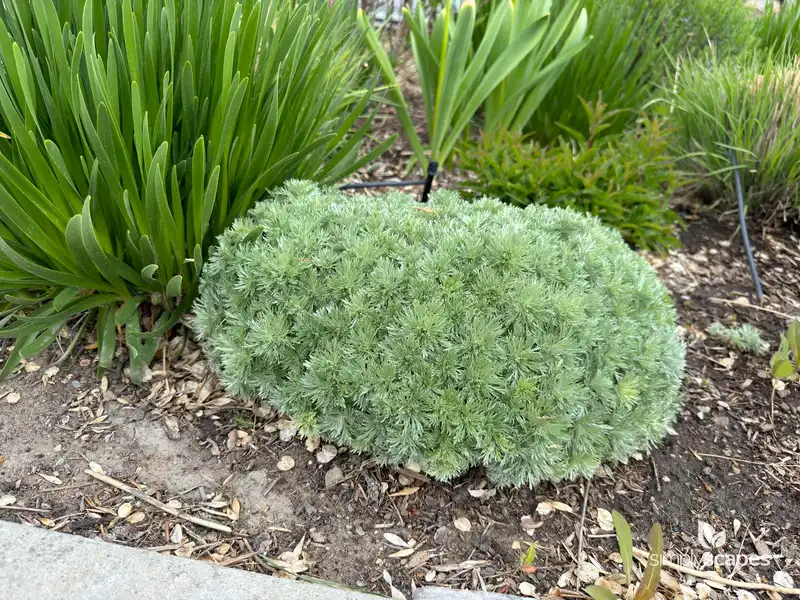
Fringed Sagebrush Wormwood
Artemisia frigida
A tough, aromatic, silvery-white groundcover perfect for dry, sunny landscapes.
- Plant Type
- Perennials & Annuals
- Width
- 6-12 In.
- Height
- 4-16 In.
- USDA hardiness zone
- 4 - 9
- Sun requirements
- Full Sun
- Design image count
- 7
Design images (7)


Bring your vision to life
The design images above are drag-and-drop ready — place this plant on a photo of your own yard and see it before you plant it.
Create design onlineAbout Fringed Sagebrush Wormwood
Fringed sagebrush is a low, aromatic, mat-forming subshrub with finely divided, soft gray-green foliage and small yellow flower heads. Its compact scale and drought tolerance suit rock gardens, dry slopes, prairie plantings, and the front of a sunny border.
## Appearance and placement
The [USDA Forest Service](https://research.fs.usda.gov/feis/species-reviews/artfri) describes plants around 4–14 inches tall and 6–12 inches wide, while height and flowering dates vary across the species’ wide range. The [Montana Field Guide](https://fieldguide.mt.gov/speciesDetail.aspx?elcode=PDAST0S0L0) confirms the native, short-lived perennial subshrub identity and gray-green divided leaves. In dry, coarse soils it often forms low mats; in wetter or disturbed places it can grow more freely.
## Siting and seasonal interest
Provide sun and well-drained ground. The Forest Service reports good drought tolerance and typically dry, coarse sites, though fringed sagebrush also occurs beside streams and other moist areas. Utah State University’s western native plant guide describes dry, well-drained slopes, full sun, and a medium-to-fast growth rate depending on moisture and temperature. Flower stalks appear in midsummer in northern prairie studies and open flowers continue into late summer or early fall.
## Maintenance
Water new plants until established, then avoid routine heavy irrigation in well-drained sites. Remove damaged or untidy stems if needed; pruning can prompt fresh, fuller regrowth. Do not divide or routinely shear the low mat. In dense plantings, leave room for neighboring low grasses and perennials and monitor for powdery mildew or root rot in poorly drained soil.